
The Silent Stone: Echoes of Hampi
Horror (Part 3/3) - ABikram Mondal
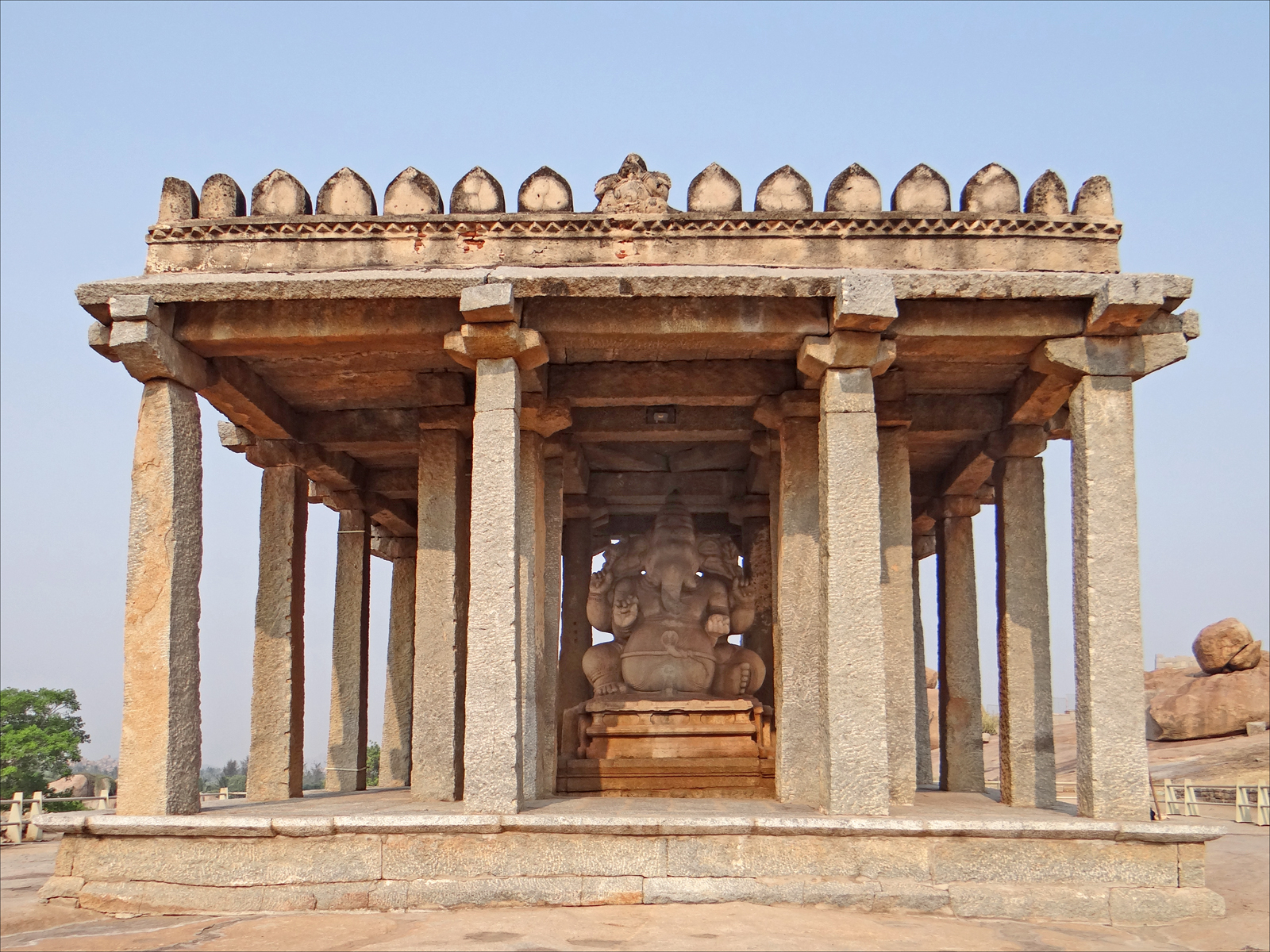
The apathy in Karthik’s eyes, the flatness of his voice, was a stark mirror to the chilling descriptions Rohan had unearthed. This wasn't just Hampi’s heat, nor the exhaustion of relentless exploration. This was the curse, a silent, insidious draining of spirit. Rohan felt a desperate urgency claw at him. He couldn’t let Karthik, or anyone else, succumb to this desolate emptiness.
He tried again to speak to Professor Varma that evening, pulling him aside after dinner at their guesthouse. “Sir, Karthik, he’s not well. It’s more than just being tired. And the things I told you, about Kalidasa and the curse…”
Varma sighed, rubbing his temples. “Rohan, I appreciate your enthusiasm for local legends, but we’re here for an architectural study. Karthik is probably just overstimulated, like you. Hampi can be overwhelming.” He looked at Rohan with a mixture of concern and exasperation. “Focus on your thesis, not on ghost stories.”
The dismissal stung, but Rohan understood. Varma, a man of empirical evidence and academic rigour, would never accept something so intangible. He needed proof, something undeniable. But what proof could he offer for a spiritual desolation?
Over the next two days, the change in Karthik became more pronounced. He stopped taking notes, his usually keen observations replaced by vacant stares. During a lecture on the hydraulic systems of the Vijayanagara Empire, Karthik simply walked away mid-sentence, wandering towards the Tungabhadra River without a word. Rohan found him sitting by the riverbank, tracing patterns in the dust, his face expressionless. “Karthik, what are you doing?” Rohan asked, his voice tight with worry.
“Doesn’t matter,” Karthik mumbled, not looking up. “Nothing really matters, does it? All these stones, all this history… it’s just dust. We’re all just dust.” His words, devoid of emotion, echoed the very core of the curse’s insidious work: the erosion of meaning, the extinguishing of vitality.
Rohan knew he couldn't wait any longer. He had to return to the forgotten temple, the source of this awakening. He packed a small bag: a few incense sticks, some kumkum and turmeric powder, a small copper lamp, and a handful of fresh jasmine flowers. He didn’t know if these were the right offerings, but they were gestures of reverence, a language the ancient texts hinted at.
He slipped away from the group early the next morning, before the oppressive heat settled in. The path to the forgotten temple felt different now, less a historical curiosity and more a pilgrimage. He felt a faint throbbing in his own temples, a dull ache behind his eyes, a subtle draining that mirrored Karthik’s more acute symptoms. The curse was still at work, a quiet predator.
The temple stood as he remembered it, silent and shadowed. The carved figure of the architect, Kalidasa, seemed to watch him with a silent plea. Rohan knelt before it, placing the jasmine flowers at its base. He lit the incense, its sweet smoke curling upwards, a fragile offering against centuries of neglect. With trembling hands, he lit the copper lamp, its small flame flickering, a beacon of remembrance in the dim light.
“Kalidasa,” Rohan whispered, his voice hoarse, “we see you. We see your suffering, your artistry, your pain. Hampi is not just stones and history; it is your heart, your blood, your lament. We seek not to possess it, but to understand, to acknowledge. Forgive our ignorance.” He sprinkled the kumkum and turmeric, ancient symbols of respect and auspiciousness, around the carving.
As he spoke, a profound shift occurred. The air in the temple, previously heavy and still, seemed to lighten, to breathe. The dull ache in Rohan’s head receded. He felt a subtle loosening, as if a tight knot within him had begun to unravel. The silence was no longer oppressive, but expectant.
Just then, a frantic voice echoed from the temple entrance. “Rohan! What in the name of… Karthik!”
Professor Varma stood there, his face pale with alarm. Behind him, two other students struggled to support Karthik, whose legs had given way. Karthik’s eyes were wide and unfocused, his breath shallow. He looked utterly drained, a skeletal echo of himself.
Varma rushed to Karthik, his academic composure shattered by pure fear. He checked Karthik’s pulse, then looked at Rohan, his eyes demanding an explanation, but also pleading for help. “What is happening to him, Rohan? He just collapsed. The doctors… they don’t understand.”
Rohan looked at the flickering lamp, the smoke of the incense, then back at Varma. “Sir, it’s what I told you. The curse. Kalidasa’s suffering. It’s draining him. It’s draining us all. We have to acknowledge it.”
Varma, seeing the undeniable evidence of Karthik’s rapid decline, the failure of conventional medicine, finally faltered. The desperation in his eyes was clear. “Acknowledge what, Rohan? What do we do?”
Rohan explained, quickly, the legend, the need for remembrance, for empathy. He told Varma about the forgotten architect, his betrayal, his despair etched into Hampi’s very soul. “We must acknowledge his contribution, his pain. Not as a legend, but as a truth. His spirit seeks recognition for his sacrifice.”
Varma, a man who had dedicated his life to the objective study of history, found himself in a place beyond his textbooks. He looked at the carved figure, then at Karthik’s fading form. He saw the genuine distress in Rohan’s eyes, the conviction that transcended mere superstition. And he saw Karthik, a young man, a student, slipping away.
Slowly, deliberately, Varma knelt beside Rohan. He looked at the carving, truly looked, perhaps for the first time, seeing not just ancient art, but a story, a wound. He bowed his head. “Great architect,” Varma said, his voice quiet but clear, echoing through the temple, “we, who study these stones, have failed to see the soul within them. We acknowledge your genius, your vision, and the profound suffering that birthed this magnificent city. Forgive our oversight. May your spirit find peace, knowing your legacy is seen, truly seen, and remembered with the honour it deserves.”
As Varma spoke, a palpable wave of energy, warm and gentle, seemed to wash over the temple. The flickering flame of the lamp brightened, casting long, dancing shadows. A soft breeze, carrying the scent of earth and jasmine, stirred through the ancient space. Karthik stirred, a faint colour returning to his lips. His eyelids fluttered, and he let out a long, slow breath, like someone awakening from a deep slumber.
He opened his eyes, and for the first time in days, they held a spark of recognition, a faint return of life. He looked at Rohan, then at Varma, then around the temple. “What… what happened?” he whispered, his voice weak, but present.
The curse had receded. The desolation lifted. Hampi remained, majestic and ancient, but its silence was no longer heavy with unspoken pain. It was a silence of peace, of remembrance. Rohan looked at Professor Varma, whose face, though still etched with concern for Karthik, now held a profound understanding. The lesson was clear: true understanding of history demanded more than academic pursuit; it demanded empathy, a willingness to acknowledge the unseen wounds, the unheard laments. Some stories were not just carved in stone, but etched in the very soul of a place, demanding not just preservation, but remembrance and heartfelt acknowledgement.
Hampi, the city of forgotten glory, had found its architect’s voice, and in doing so, had offered a profound lesson to those who dared to listen.