
The Silent Stone: Echoes of Hampi
Horror (Part 2/3) - ABikram Mondal
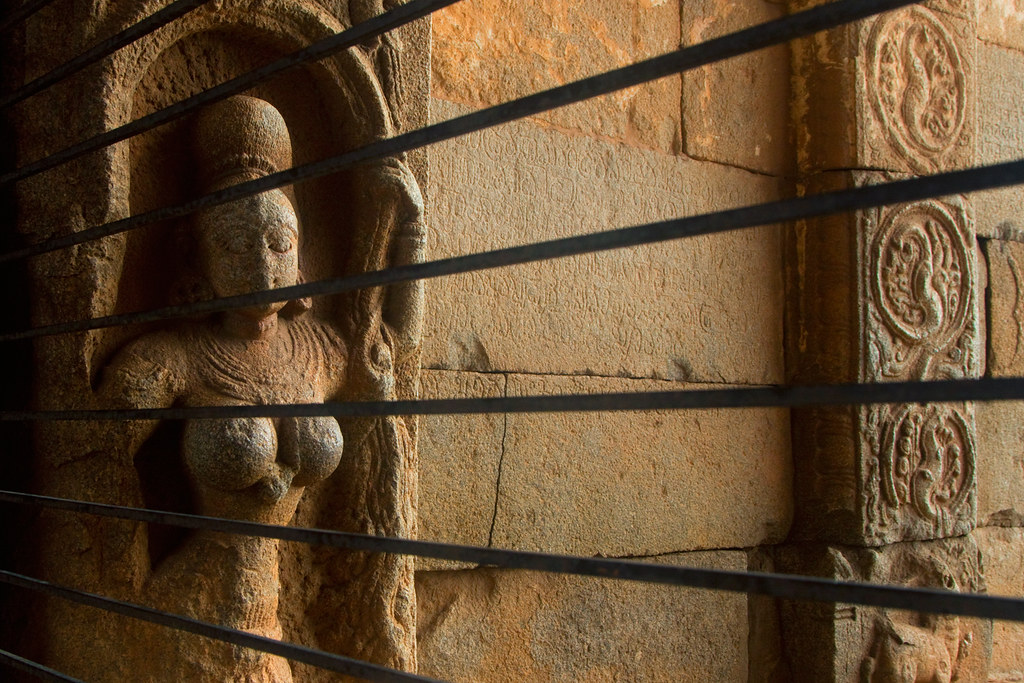
The tremor had been fleeting, a shiver that ran from the ancient stone into Rohan’s very bones. It wasn’t an earthquake, not in any conventional sense. It felt more like a sigh, an awakening. The carved eyes of the architect, Kalidasa, seemed to hold a deeper, more profound sorrow now, a silent accusation. Rohan stumbled away from the forgotten shrine, his mind a whirlwind of doubt and growing fear. Had he truly felt something, or was it merely the power of suggestion, the exhaustion of the day, playing tricks on him?
He spent the next few days in a haze, the grandeur of Hampi’s ruins suddenly overshadowed by a pervasive sense of unease. The vibrant reds and ochres of the Vijayanagara architecture, once so inspiring, now seemed to bleed into a melancholic grey. He tried to focus on his field notes, on the intricate construction techniques and the historical context Professor Varma had so meticulously outlined, but the legend of Kalidasa gnawed at him. He sought out the most obscure texts in the local libraries, poring over ancient manuscripts and brittle palm-leaf scrolls, hoping to find more about the architect’s fate.
What he uncovered was fragmentary, yet chillingly consistent. Kalidasa, a genius of his time, had been commissioned by the King to design Hampi’s most magnificent structures. But a rival, consumed by jealousy and political ambition, had falsely accused him of treason. The king, swift and unforgiving in his justice, had ordered Kalidasa to be blinded and his hands severed, condemning him to watch his life’s work completed by others. The legends whispered that before his death, Kalidasa, in his unimaginable agony, had poured his very soul, his despair and his curse, into the stones he had once loved. The betrayal wasn't just physical, it was spiritual, a violation of his artistic essence. The curse, as the texts described it, was not a sudden cataclysm, but a slow, insidious draining, a spiritual decay that would afflict those who sought to 'possess' Hampi's legacy without reverence, those who merely saw it as an object of study or conquest, rather than a testament to human spirit and suffering.
Rohan felt it first as a subtle fatigue. He woke up feeling unrefreshed, as if his dreams had been a marathon. His usually sharp mind struggled to retain details. He’d forget names, misplace his notes, things entirely out of character for him. He attributed it to the Hampi heat, the rigorous schedule, the sheer volume of information. But then the illusions started. Fleeting, peripheral glimpses. A shadowy figure at the edge of his vision, hunched and limping, always disappearing before he could properly focus. The sound of distant, mournful hammering, even in the dead of night. He heard it one evening while walking back from the Tungabhadra River, a rhythmic, metallic echo that seemed to emanate from the very heart of the ruins, a sound that resonated with the agony he'd read about.
He tried to talk to his roommate, Priya, about it. “Don't you feel something... off, about Hampi?” he asked one evening, trying to sound casual. “Beyond the usual awe, I mean.”
Priya, meticulously drawing a temple facade, barely looked up. “It's magnificent, Rohan. And yes, a little overwhelming. But 'off'? You’re probably just burnt out. This trip is intense.”
He tried Professor Varma. “Sir, I've been researching Kalidasa, the architect… the legends about his curse.”
Professor Varma, a man of empirical knowledge and academic rigor, smiled kindly. “Ah, the local folklore. Fascinating, isn't it? Adds a certain mystique. But Rohan, remember, we are here to study architecture, not superstition. The true curse, if you will, is the neglect of these historical sites, the erosion of time, not some spectral architect.” He tapped a stack of schematics. “Focus on the structural integrity, the engineering marvels. That’s where the real story lies.”
Rohan felt a growing chasm open between him and his peers, his mentors. They saw beauty, history, academic challenges. He felt a creeping dread, a sense of something deeply wounded stirring beneath the surface. He felt increasingly isolated, the burden of his discovery pressing down on him. The fatigue deepened. He found himself staring blankly at his textbooks, unable to concentrate. His vibrant energy, usually boundless, felt like a leaky bucket, slowly emptying.
One afternoon, he found Karthik, another student, sitting hunched against a pillar at the Vittala Temple, looking pale and disoriented. Karthik, usually boisterous and full of life, seemed drained, his eyes hollow. “You alright, man?” Rohan asked, a prickle of alarm running down his spine.
Karthik just shook his head, pressing a hand to his forehead. “Just… tired. So tired. And everything feels… dull. Like the colours have faded.” He looked around at the vibrant carvings, the magnificent chariot, with a strange, detached apathy. “It’s like I can see it, but I can't feel it anymore. The magic, it's just gone.”
Rohan’s blood ran cold. This wasn't just exhaustion. This was exactly what the ancient texts described: a slow spiritual decay, a desolation. The curse wasn't just a story. It was real, and it was beginning to manifest, not just in Rohan, but in those around him, those who, like him, were trying to ‘possess’ Hampi intellectually, dissecting its beauty without acknowledging the deeper, darker currents that flowed beneath its stones. He had woken something, and now it was reaching out, its silent tendrils seeking to drain the very vitality from those who dared to probe its secrets without reverence, without understanding the architect's profound, unresolved pain. He had to find a way to stop it, before Hampi, and everyone in it, became merely an echo of its former self.