
The Cartographer's Shadow
The Mapmaker's Secret
2026-07-28 · ABikram Mondal
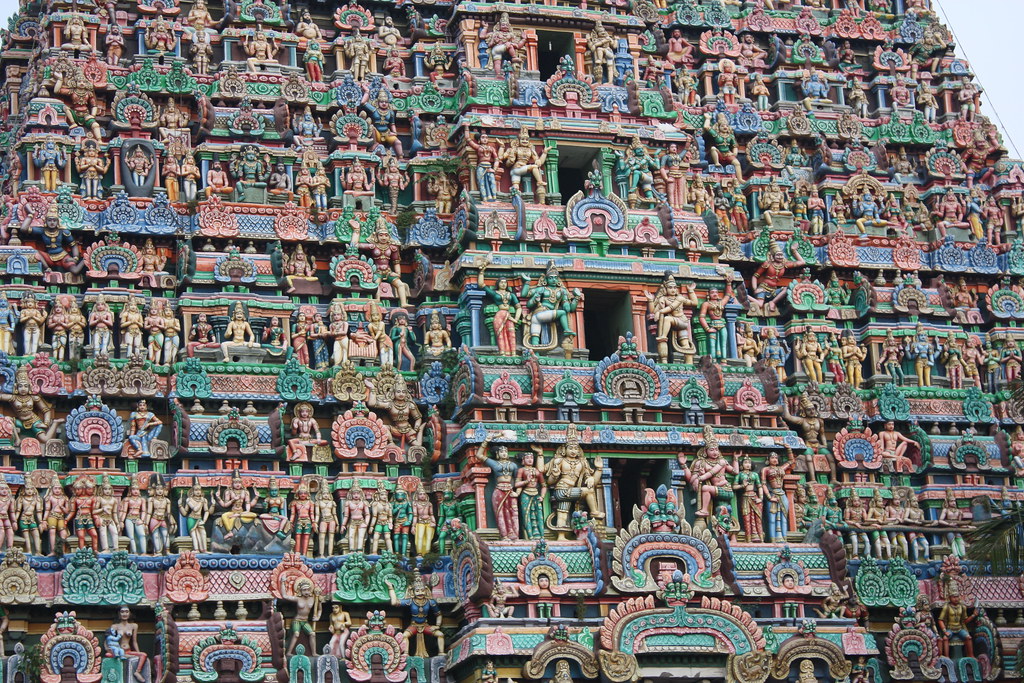
The monsoon had broken, washing the dust from the gulmohars and leaving the old city of Ahmedabad glistening, a canvas of ancient brick and carved wood. Rajan, his spectacles perched low on his nose, traced a finger along the faded copperplate script on the parchment. His small shop, crammed with forgotten maps and dog-eared histories, smelled of old paper and the damp earth outside. He was a cartographer of the lost, a restorer of obscure geographies, and today, an unusual commission lay before him.
It had arrived three days prior, delivered by a silent courier draped in a pristine white kurta, bearing a sealed, heavy wooden box. Inside, nestled on a bed of raw silk, was not a map, but an intricately carved wooden globe, no larger than a child’s head. Its surface, dark with age, depicted a familiar world, yet something was subtly, disturbingly wrong. The coastlines of Gujarat, his home, were etched with a precision that hinted at an ancient, almost forgotten accuracy, but the interior was a perplexing labyrinth of symbols and lines that bore no resemblance to any known survey.
The accompanying note, penned in elegant Gujarati, was brief and to the point: “To the last of the Mondals. Unveil the hidden. The truth of the Sabarmati lies within. Return to the source, and the path will reveal itself. Seek the seven seals.” It was unsigned, but the reference to his family, the generations of cartographers who had served the Solanki and later the Mughal courts, was unmistakable. Rajan was the last, a quiet scholar in an age of digital maps, content with his dusty archives.
He turned the globe slowly, his gaze lingering on the region around the Sabarmati River, which flowed through Ahmedabad. Here, the symbols were particularly dense, resembling miniature versions of ancient Vedic Yantras, geometrical diagrams used in rituals. He had seen similar motifs in temple architecture and old astrological charts, but never applied to geography. It was as if someone had attempted to map not just the physical land, but its spiritual or mystical essence.
His heart quickened. This was no ordinary antique. This was a puzzle, a whisper from the past. He remembered his grandfather, a man of few words but profound knowledge, once muttering about a 'secret cartography' of Gujarat, a hidden network of ancient sites and subterranean passages that predated even the oldest known cities. Rajan had dismissed it then as an old man's fancy, a tale spun from too many hours spent poring over crumbling manuscripts. Now, the wooden globe felt like an echo of that forgotten tale.
He pulled out his magnifying glass, its brass frame gleaming in the afternoon light. He focused on a small, almost imperceptible indentation near the confluence of the Sabarmati and a minor tributary, a spot he knew well, a place marked by a dilapidated Shiva temple on modern maps. Under magnification, the indentation resolved into a tiny, almost invisible keyhole. Rajan’s breath hitched. Seven seals. This was the first.
He spent the rest of the day in a feverish study, comparing the globe’s strange markings to every ancient map and text in his possession. He cross-referenced names of forgotten villages, obscure pilgrim routes, and even local folklore about 'invisible rivers' and 'whispering stones'. The globe was a Rosetta Stone of forgotten knowledge, hinting at a landscape both real and imagined, a synthesis of earth and myth.
As dusk painted the sky in shades of saffron and violet, Rajan found himself staring at a faded watercolor print of the Adalaj Stepwell, a marvel of ancient engineering and intricate carving, less than twenty kilometers from his shop. On the print, in one of the deep, shadowed niches, he noticed a faint, almost erased symbol. It was identical to one of the Yantra-like markings on his mysterious globe, a symbol he now recognized as a stylized representation of the Ashoka Chakra, but with an unusual, additional spoke.
He closed the shop, the heavy wooden door groaning shut behind him. The air was thick with the scent of jasmine and the distant chatter of evening prayers. He knew he had to go to Adalaj. The first seal, the note had said. The truth of the Sabarmati. What ancient secret lay buried beneath the familiar sands of Gujarat, waiting for a lost art to reveal it?