
The River's Secret: A Kalighat Chronicle
Historical (Part 2/3) - ABikram Mondal
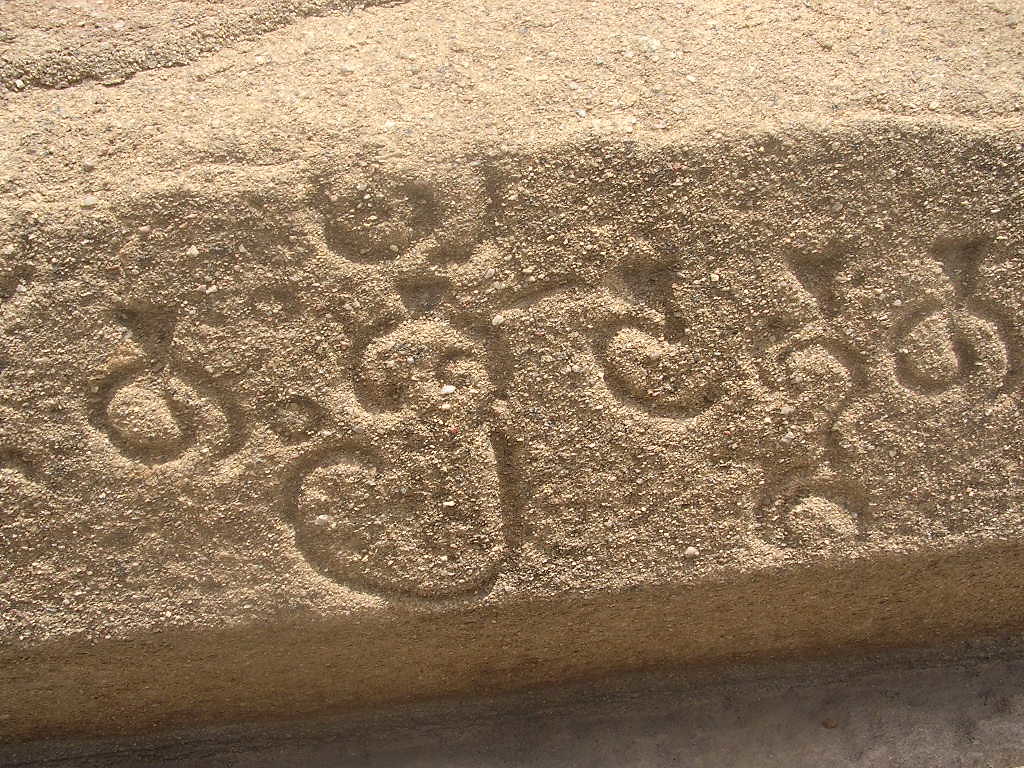
The darkness in Bimal’s boathouse was absolute, thick as river silt. The whisper, ‘Shukra,’ seemed to hang in the air, a physical presence, before dissolving into the rhythmic lapping of the Hooghly against the hull. He fumbled for the matchbox, his fingers surprisingly steady despite the tremor that still lingered in his chest. When the lamp flickered back to life, its feeble glow chased away some of the shadows, but not the chill that had settled deep within him. He looked at the box, then at the three figurines, their unseeing eyes now seeming to mock him. The parchment, with its enigmatic Brahmi script and repeating symbols, felt heavier in his hand. Shukra. Venus. Why this word, whispered from an ancient box on the banks of the Adi Ganga?
Days bled into each other, each dawn bringing Bimal back to the box. He tried to dismiss the whisper, to rationalise it as the wind, or the creak of old wood. Yet, the word, the symbols, the blank faces of the figurines, gnawed at him. He cleaned the box, tracing the intricate carvings, feeling the smoothness of the aged wood beneath his calloused fingers. The serpent, the moon, the tear-drop eye. He had seen similar motifs in old texts, symbols of fertility, divinity, cosmic knowledge. But the combination, the specific arrangement, felt unique, almost like a riddle. He knew he could not decipher it alone. His youth’s brief flirtation with ancient scripts at the Asiatic Society library had been just that: a flirtation, not a mastery.
His thoughts turned to Professor Anya Sharma. She was a name that echoed through the academic circles of Kolkata, a historian at the Asiatic Society known for her sharp intellect and an almost obsessive dedication to unearthing forgotten fragments of Bengal’s past. She had published extensively on the Kalinga dynasty, a powerful ancient kingdom whose influence had stretched far beyond its borders, and whose mysteries, Bimal remembered, she often spoke of with a peculiar intensity. He had only seen her from a distance, a woman of elegant bearing, always surrounded by students, her voice clear and authoritative even across a crowded lecture hall. He, a simple ferryman, would be an odd visitor.
Still, the box compelled him. One humid Tuesday morning, Bimal put on his cleanest kurta, wrapped the box and parchment carefully in an old silk cloth, and took the tram to Park Street. The Asiatic Society building, with its grand colonial architecture and sprawling, tree-shaded grounds, felt a world away from the muddy banks of the Hooghly. He felt a familiar unease as he stepped through its imposing gates, a sense of being an outsider in a place of profound knowledge. He was directed to Professor Sharma’s office, a room overflowing with books, maps, and ancient artefacts. The air was thick with the scent of old paper and dust, a scent that always brought a strange comfort to Bimal.
Anya Sharma looked up from a stack of manuscripts, her spectacles perched on her nose. She was younger than Bimal had imagined, her eyes bright with an almost restless intelligence. “Can I help you?” she asked, her voice polite but with an underlying weariness, as if she was accustomed to interruptions.
Bimal, feeling suddenly awkward, fumbled with the silk-wrapped package. “Professor Sharma, my name is Bimal Mondal. I am… a ferryman. I found something. Something I think might interest you. It’s… old.”
Anya’s eyebrows arched slightly. She had received many such ‘finds’ over the years, most of them genuine but unremarkable, a few outright forgeries. But there was something in the ferryman’s earnestness, the way his weathered hands clutched the package, that held her attention. “Please, sit,” she offered, gesturing to a chair piled with more books. She watched as he carefully unwrapped the box, her professional curiosity stirring.
When the carved wooden box was revealed, Anya leaned forward, a flicker of genuine interest in her eyes. The intricate motifs, the clear signs of extreme age, spoke of skilled craftsmanship. But it was the three stone figurines that truly captivated her. She picked up the Shiva, turning it in her fingers. “Remarkable detail,” she murmured, her voice losing its earlier formality. “The style… it has echoes of early Pala period, perhaps even earlier, late Gupta. But the faces…” She paused, her brow furrowing. “They are unusually… blank. Almost like a template, waiting for a feature to be etched.”
Bimal watched her, a knot of anticipation tightening in his stomach. He then presented the parchment. Anya took it with extreme care, her movements precise and practiced. Her eyes widened slightly as she saw the script. “Brahmi. And a very archaic form indeed. This is… significant.” She pulled a magnifying glass from her desk drawer, her gaze sweeping over the symbols. “The serpent, the crescent moon… and this.” She pointed to the tear-drop eye. “This is fascinating. This specific combination… I’ve never seen it quite like this. It’s almost a… signature.”
Bimal, emboldened, recounted the story of finding the box, the river’s strange offering, and the chilling whisper. He hesitated before uttering the word. “And then, in the darkness, it whispered… ‘Shukra’.”
Anya froze, her hand still hovering over the parchment. She looked up at Bimal, her bright eyes suddenly intense. “Shukra?” she repeated, her voice barely above a whisper. “Venus. That changes things. Completely.” She stood up, her earlier weariness replaced by an electric energy. “Mr. Mondal, this is not just an old artefact. This could be… a gateway. To something truly profound. The Kalinga dynasty, a powerful and enigmatic kingdom, was known for its advancements in astronomy and its esoteric cults. There are legends of a lost knowledge, a powerful artifact, or a hidden observatory. And many of those legends whispered of a connection to Shukra, to Venus, as a celestial guide, a harbinger of cycles, of destiny.”
She walked to a large bookshelf, pulling down a thick, leather-bound volume. “There are tales, almost forgotten, of a secret society, the ‘Shukra Vratas’, who revered Venus. They were said to possess knowledge of cosmic events, of time itself, and to guard a ‘truth’ hidden from the common man. Their symbols were said to be a serpent, representing cycles; the moon, for celestial paths; and an eye, not a tear-drop, but an all-seeing eye of knowledge. This tear-drop…” She trailed off, her gaze returning to the parchment. “This is new. A deviation, or a key.”
“But what does it mean?” Bimal asked, his voice hoarse.
Anya looked at him, her expression serious. “It means, Mr. Mondal, that you have stumbled upon a piece of history that has been deliberately buried. And if it is what I suspect, it means others might be looking for it too. This parchment… if we can decipher it fully, it might lead us not to a treasure of gold, but to something far more valuable. A lost understanding.” She tapped the parchment with a finger. “This script, these symbols, and the name ‘Shukra’… it hints at a location. Perhaps a temple, a crypt, an ancient observatory. Something hidden, likely beneath Kalighat itself, or along the banks of the Adi Ganga, where the old river once flowed. We must be discreet, Mr. Mondal. Very discreet. This is a journey we embark on together, and I have a feeling it will lead us into shadows deeper than any you’ve known on the Hooghly.”