
The Obsidian Mirror of Nalanda
The Confluence of Shadows
2026-09-10 · ABikram Mondal
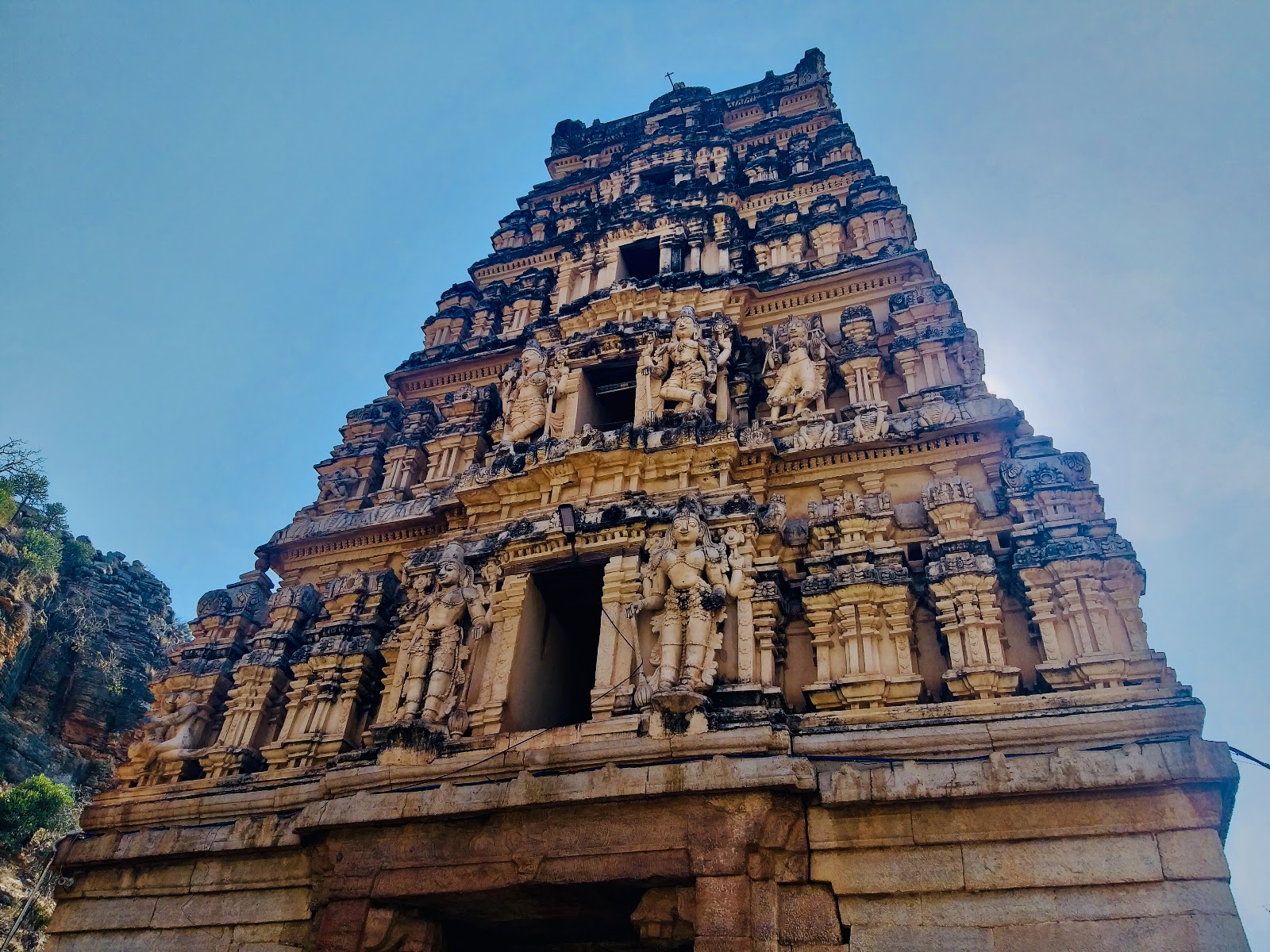
The Confluence of Shadows
The journey back to Nalanda felt like a race against an invisible clock. The old woman’s words, a tapestry of myth and terrifying intent, replayed in Rathore’s mind. “Dominion over history itself.” The concept was a poison, insidious and far more dangerous than any tangible weapon. He found Professor Narayan poring over ancient texts in the makeshift study at the archaeological camp, his brow furrowed with a familiar intensity.
“Professor,” Rathore began, his voice tight, “I have learned more. The Anagatavadin, they seek to use the mirror not to predict, but to project. To create a new historical narrative, one so potent it will rewrite collective memory. And they plan to do it during a ‘Confluence of Stars’ at a place of ancient power, linked to Jarasandha.”
Narayan looked up, his spectacles glinting in the lantern light. His usual academic calm wavered. “Project? Like a grand illusion? A shared hallucination, sustained and reinforced until it becomes accepted truth?” He pushed a brittle palm leaf manuscript across the table. “I’ve been reading about Jarasandha’s later years. There’s a mention, oblique and unsettling, of a ‘Chamber of Whispers’ beneath the old Magadhan capital, Girivraja. Not the famous citadel, mind you, but an older, forgotten structure. A place where Jarasandha was said to consult ‘the unseen architects of fate.’ It was believed to amplify his will, to make his pronouncements resonate not just in the ears, but in the very souls of his subjects.”
Girivraja, the ancient capital, now modern Rajgir. A network of hills, caves, and forgotten fortresses. It fit the old woman’s description perfectly. “And the Confluence of Stars?” Rathore pressed.
Narayan’s finger traced a celestial diagram in another text. “The Confluence, as described in some archaic astrological charts, refers to a rare alignment of Jupiter, Saturn, and Mars. It’s said to occur every few centuries, a moment when the veil between realms, between past and present, thins. Ancient texts speak of it as a time of immense energetic flux, ideal for rituals of profound influence. It is… tomorrow night.”
A chill snaked down Rathore’s spine. Tomorrow. So little time. “The Chamber of Whispers. Can we find it?”
Narayan nodded, already gathering his notes, the thrill of discovery warring with genuine apprehension. “There are old excavation maps, crude and incomplete, but they hint at a concealed entrance within a complex of Jain caves on the Vaibhar Hill. A place most archaeologists dismissed as a mere storage antechamber.”
They moved with a speed born of desperation. The drive to Rajgir was a blur of darkness and escalating anxiety. The old woman’s warnings, Rakesh’s frantic explanations, the dagger, the mirror’s unsettling properties—it all converged into this single, perilous night. They arrived at the base of Vaibhar Hill as the first hint of predawn light began to smudge the eastern sky. The Jain caves, ancient and silent, loomed above them.
Navigating the labyrinthine passages by the beam of a single flashlight, Narayan eventually pointed to a section of wall that seemed unnaturally smooth, despite centuries of erosion. “Here,” he whispered, his voice echoing in the confined space. “The maps indicate a hidden lever, disguised as a ritual offering stone.”
Rathore found it, a small, worn stone that gave way with a faint click. A section of the wall receded, revealing a narrow, descending passage, choked with the dust of ages. The air within was thick and still, carrying the scent of damp earth and something else, something metallic and sharp, like ozone.
At the end of the passage, they emerged into a vast, circular chamber, carved deep into the heart of the hill. It was not empty. At its center, on a raised dais, sat the obsidian mirror, its dark surface gleaming malevolently in the light of several flickering torches. Surrounding it were five figures, robed in dark, unadorned cloth, their faces obscured by deep hoods. They chanted in low, guttural tones, a rhythm that seemed to vibrate through the very stone of the chamber. On the floor around them, intricate diagrams were etched, glowing faintly with what looked like phosphorescent powder. A shiver, colder than the chamber’s air, ran through Rathore. This was no ordinary theft. This was a ritual.
One of the figures, taller than the rest, raised a hand. The chanting intensified. The mirror began to hum, a low thrum that grew in intensity, until it felt like it vibrated in Rathore’s bones. He saw it then, a subtle distortion in the air above the mirror’s surface, a shimmering, like heat haze, but black. It was drawing in light, drawing in sound, drawing in something unseen, something fundamental. It was a projection, forming slowly, coalescing into images that flickered with impossible speed. Not reflections, but nascent visions of an alternate past, a re-imagined Jarasandha, triumphant, eternal.
“They are trying to manifest it,” Narayan gasped, his voice strained. “To force the collective consciousness to accept a new truth. Look, the symbols, they’re Kalachakra mandalas, twisted, inverted. They’re attempting to reverse the flow of perceived time, to make an imagined past seem real.”
Rathore knew he had to act. He drew his service revolver, the cold steel a stark contrast to the mystical fervor around them. “Stop!” he commanded, his voice echoing, momentarily cutting through the chanting. The robed figures froze, their hooded heads turning in unison towards the sound. The tallest figure stepped forward, revealing a face Rathore recognized with a jolt of recognition: Rakesh, the antique dealer. His eyes, usually sharp with mercenary cunning, now blazed with a terrifying, almost religious zeal.
“Inspector,” Rakesh’s voice was calm, utterly devoid of his usual charm. “You are too late. The Confluence is upon us. Soon, Jarasandha will reclaim his rightful place. History will be corrected.”
“You cannot rewrite the past, Rakesh,” Rathore countered, aiming his weapon at the mirror. “You can only create a lie.”
“A lie sustained by the Dark Eye becomes truth!” Rakesh hissed, taking another step towards the mirror. The other robed figures began to move, their hands delving into their robes, revealing short, wickedly curved daggers, identical to the one found at Nalanda.
Rathore fired. Not at Rakesh, but at the dais supporting the mirror. The stone splintered. The mirror, momentarily unbalanced, tipped. It didn’t shatter. Instead, it spun, its dark face momentarily reflecting the distorted, chanting figures, then the crude cave walls, then the ceiling. As it spun, the projected images above it fragmented, dissolving into a kaleidoscope of fleeting, impossible histories. The humming intensified, reaching a piercing shriek. Then, with a deafening CRACK, the obsidian mirror split cleanly down its middle, not shattering into shards, but dividing into two perfect, smaller halves. The black sheen dulled. The humming died. The projected illusion vanished.
The sudden silence was profound, broken only by the ragged breathing of the robed figures. Rakesh stared at the two halves of the mirror, his face a mask of disbelief and utter despair. The zeal in his eyes extinguished, replaced by a hollow emptiness. The other figures, their daggers still clutched, seemed to deflate, the furious energy draining from them. The Confluence of Stars, if it had ever truly begun, had been interrupted.
Rathore kept his weapon steady. “It’s over, Rakesh. Your ambition dies with Jarasandha’s forgotten dreams.”
The Anagatavadin offered no resistance. They simply stood, defeated, staring at the inert halves of the once-powerful mirror. The Chamber of Whispers, once a crucible of ancient power, now felt like a tomb. As the police reinforcements arrived at dawn, guiding the cultists out, Rathore looked at the broken mirror. Its power was gone, or perhaps, merely dormant, waiting for another hand, another ambition. But the lesson was clear, etched into the very silence of the chamber: history, with all its triumphs and tragedies, its certainties and its unsolved mysteries, must be preserved, not manipulated. To seek dominion over its narrative was to court not power, but a terrifying, self-destructive delusion. Professor Narayan, his face pale but resolute, placed a hand on Rathore’s shoulder. The mirror was broken, but the knowledge it represented, the dangerous allure of rewriting the past, would forever remain a shadow in their understanding.