
The Last Maharani's Shadow
Whispers of the Black Lotus
2026-07-25 · ABikram Mondal
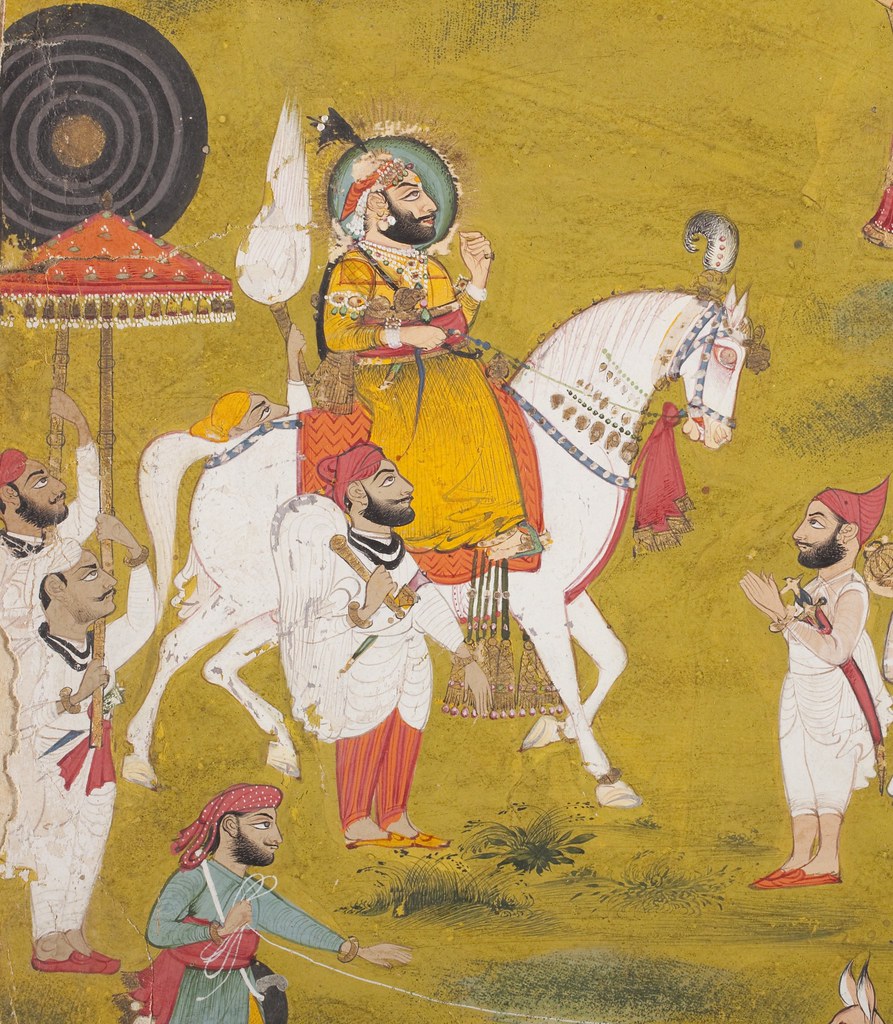
The monsoon had broken over Udaipur with a fury that felt ancient, a primal drumming against the thick stone walls of the City Palace. Rain lashed the Pichola, turning its usually placid surface into a churning canvas of grey and silver. Inside, in the hushed, echoing galleries of the Maharana’s private collection, Dr. Anjali Sharma traced a finger over the faded calligraphy of an eighteenth-century manuscript. Its title, "Chhaya-Kamal" or "Shadow Lotus," was fitting given the gloom outside and the deeper shadows it suggested.
Anjali, a historian specializing in Rajputana’s lesser-known dynasties, had been granted unprecedented access to this section of the royal archives. Her current obsession: the enigmatic Maharani Padmini Devi, who reigned briefly and controversially in the early 1800s before vanishing without a trace. Official records claimed she succumbed to a sudden illness, a conveniently vague end that had always troubled Anjali. The manuscript, recently rediscovered in a hidden compartment of an old writing desk, was written by Padmini Devi herself.
“Remarkable, isn’t it, Doctor?” The voice belonged to Vikram Singh, a distant descendant of the royal family and the current custodian of the archives. He was a man in his late forties, with a cultivated air and eyes that seemed to miss nothing. “My ancestors, they were rather fond of their secrets.”
Anjali nodded, not looking up. The script was delicate, almost ethereal, yet the words throbbed with an undercurrent of urgency. “She writes of a ‘black lotus,’ not a flower, but an object. A key, perhaps? Or a symbol of something more… dangerous.”
Vikram chuckled, a dry, rustling sound. “The lore of the Black Lotus. Yes, it’s a popular fable among the older servants. A mythical artifact, said to grant its possessor dominion over the very elements. Nonsense, of course. A child’s tale.”
But Anjali wasn’t convinced. Padmini Devi was no child. Her prose, even in its poetic flourishes, was sharp, intelligent. She described clandestine meetings in the labyrinthine alleys of the old city, cryptic warnings, and a growing sense of dread. The manuscript hinted at a power struggle, not just for the throne, but for something far greater, something tied to the very foundations of the Mewar kingdom.
One passage, in particular, seized Anjali’s attention. Padmini Devi wrote: "They seek the root, the origin. The stone that breathes beneath the earth, awakened by the lunar eclipse, guarded by the silent sentinels of the Aravallis. The Black Lotus is but its shadow, its voice."
“The Aravallis,” Anjali murmured, her mind racing. The ancient mountain range that cradled Udaipur. “What ‘stone that breathes’ could she be referring to?”
Vikram’s expression tightened almost imperceptibly. “Local superstition. There are many such tales. Old mines, forgotten temples, whispers of Jinn. Nothing concrete, Doctor. Just folklore.” He moved closer, his gaze lingering on the manuscript. “Perhaps you’ve spent too long in the archives. The rain is letting up. Would you care for some tea in the main hall?”
Anjali felt a prickle of unease. Vikram’s dismissal was too swift, too practiced. He was polite, but there was a subtle, almost imperceptible shift in his demeanor. It was as if she had strayed too close to a protected boundary.
Later that evening, back in her modest guest room at a heritage hotel overlooking Lake Pichola, Anjali reviewed her notes. The air outside was still heavy with moisture, and the distant sound of temple bells carried across the water. She cross-referenced Padmini Devi’s reign with historical records of geological anomalies or significant astronomical events. Nothing immediately jumped out.
She pulled out her laptop and searched for “Black Lotus” and “Aravalli folklore.” The results were a mix of new-age spirituality and tourist blogs. Then, a lesser-known academic paper surfaced: “Pre-Mughal Mining Practices in Southern Rajasthan: An Examination of Rare Earth Elements.” The author, Dr. Arun Chopra, mentioned ancient copper and zinc mines in the Aravallis, but also alluded to local legends of a rare, iridescent mineral, said to glow under specific celestial alignments, used in forgotten alchemical rituals.
Anjali felt a thrill of discovery. This was it. Not just a mythical flower, but a mineral, a source of power, perhaps. But what power? And why would Padmini Devi, a queen, be so deeply involved? And why did Vikram Singh seem so keen to deflect her questions?
The manuscript also contained a series of intricate, almost abstract diagrams. At first, Anjali dismissed them as decorative flourishes, but now, under the focused beam of her table lamp, she saw patterns. Geometric sequences, repeating motifs. Could they be coordinates? Or a map?
She noticed a subtle difference in the paper on one particular page. Holding it up to the light, she saw a faint watermark, almost invisible. It wasn't the royal seal. It was a stylized, six-petaled flower, dark and unmistakable. The Black Lotus.
As the last of the evening light faded from the sky, painting the lake in hues of violet and rose, Anjali felt a cold certainty settle in her stomach. Padmini Devi hadn't simply vanished. She had been searching for something, something powerful enough to be worth killing for, and she had left a trail. A trail that Anjali was now, unknowingly, following.
Just as she was about to mark the page, a faint scratching sound came from her window. A branch, perhaps, scraping against the glass in the humid breeze. But then it came again, sharper, more deliberate. Like fingernails.