
The Last Dance of the Devadasi
Romance (Part 2/3) - ABikram Mondal
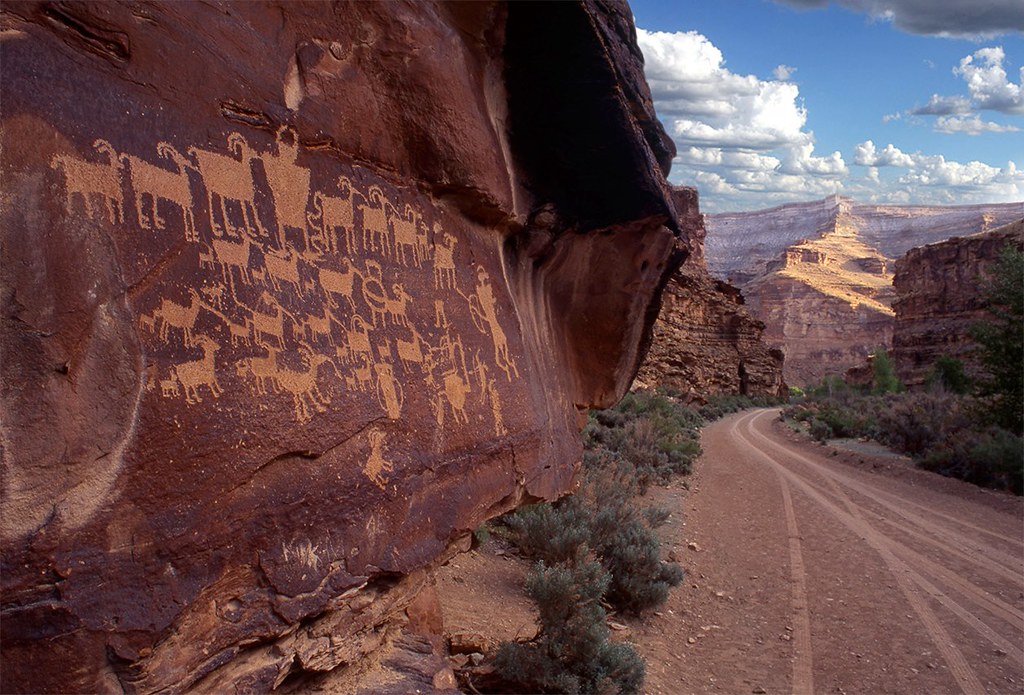
The coded symbols on the palm leaf became Anand's obsession. He spread out his grandmother's manuscript on the antique rosewood table, its pages brittle, smelling of turmeric and time. The symbols were not Devanagari, Tamil, or any script he recognised from his extensive studies of South Indian epigraphy. They were too fluid, almost artistic, yet precise. Dots, lines, curves, sometimes clustered, sometimes isolated, forming patterns that hinted at a forgotten language. He spent days in the dusty, quiet corners of the Saraswati Mahal Library, not as a historian seeking facts, but as a detective hunting for a cipher. He scoured texts on ancient temple rituals, obscure folk art, even colonial-era police reports for anything resembling the script. Each dead end only sharpened his resolve.
His breakthrough came not from a scholarly tome, but from a faded, hand-drawn map tucked inside a travelogue from the early 20th century. The map depicted the layout of the Brihadeeswarar Temple complex, and in its margins, notations from a British surveyor. Among his detailed measurements and observations were decorative motifs, almost identical to the symbols on Anand's palm leaf. They were stylised representations of specific mudras, hand gestures used in classical Bharatanatyam, often imbued with a secondary, symbolic meaning within the temple's artistic language. Lakshmi, a devadasi, would have known these intuitively. Someone, perhaps Lakshmi herself, had transformed the sacred dance into a secret alphabet.
With this key, the coded message slowly yielded its secrets. It was a narrative, fragmented but potent. It spoke of 'the sacred flame' being threatened, of 'false promises' and 'stolen devotion'. Then came the name: Rajan. The symbols surrounding his name painted a disturbing portrait. He was described as 'the shadow over the sun', 'the hand that grasps', 'the voice that silences'. More than a lover, Rajan was an oppressor. The message spoke of him attempting to seize 'the temple's true heart', not a physical object, but something deeper, more significant, intrinsic to the devadasi tradition itself. Lakshmi was not merely a victim of a forbidden love; she was a guardian, resisting a systematic desecration.
Anand's research into Rajan quickly revealed him to be not a local man, but a prominent British official. Captain Reginald Jackson, known by the locals as 'Rajan Sahib' due to his fluency in Tamil and his deep, albeit often exploitative, engagement with Indian culture. He was a collector of antiquities, a self-proclaimed connoisseur of Indian art, and a man whose influence in colonial Tanjore was vast. District records from 1912, the year Lakshmi vanished, showed Jackson had been instrumental in 'reforming' the temple administration, a euphemism, Anand now understood, for seizing control and dismantling age-old traditions under the guise of modernity and 'moral upliftment'. He had spearheaded efforts to 'repurpose' temple lands and 'catalogue' temple treasures, often resulting in their disappearance into private collections or British museums.
The chilling line, 'He took everything,' now resonated with a terrifying clarity. It was not just Lakshmi's life that Rajan had taken, but perhaps a vital part of the temple's heritage, something Lakshmi was safeguarding. The coded message hinted at a 'scroll of ancestors,' a document that held not just lineage, but perhaps the true history and spiritual significance of the devadasi tradition, a counter-narrative to the colonial vilification. Such a scroll, if it existed and fell into the wrong hands, could rewrite history, allowing Rajan to further his agenda of cultural appropriation and control.
Anand visited the old district collectorate, now a dilapidated administrative building, its files yellowed and brittle. He requested access to records pertaining to Captain Reginald Jackson and the Brihadeeswarar Temple from 1910-1915. The clerk, a portly man named Govind, eyed him with a mixture of suspicion and curiosity. "Jackson Sahib? A big man, he was. Many stories about him. Not all good." Govind eventually produced a stack of ledgers, their covers thick with dust. As Anand sifted through them, he found repeated mentions of land acquisitions, reclassifications of temple properties, and curious entries about 'missing artifacts' from the temple's treasury, often accompanied by Jackson's signature. There was no direct mention of Lakshmi, but her disappearance seemed to align perfectly with Jackson's systematic dismantling of the devadasi system and seizure of temple assets.
One evening, as the monsoon rains hammered against the windows of his ancestral home, Anand discovered a letter, not from his grandmother, but from her younger sister, addressed to Lakshmi. It was hidden in a false bottom of an old jewelry box, its script faint. It mentioned a secret meeting, a warning, and a place: 'the old granary, by the river, at the full moon.' The granary, an ancient structure used by the temple in centuries past, was now a forgotten ruin. The letter also hinted that Lakshmi had entrusted something 'precious and true' to a fellow devadasi for safekeeping, something that needed to be hidden from 'Rajan Sahib's grasping hands.' The scroll. It had to be the scroll. The stakes had just risen. This wasn't just about Lakshmi's fate, but about the preservation of a crucial piece of cultural heritage, hidden for over a century. Anand knew he had to find that granary, and whatever Lakshmi had left behind, before the past completely eroded, taking its secrets with it. He looked out at the rain, the outline of the Brihadeeswarar Temple hazy in the downpour. The full moon was only three nights away.