
The Emerald Eye of Bundelkhand
Whispers from the Monsoon Earth
2026-08-28 · ABikram Mondal
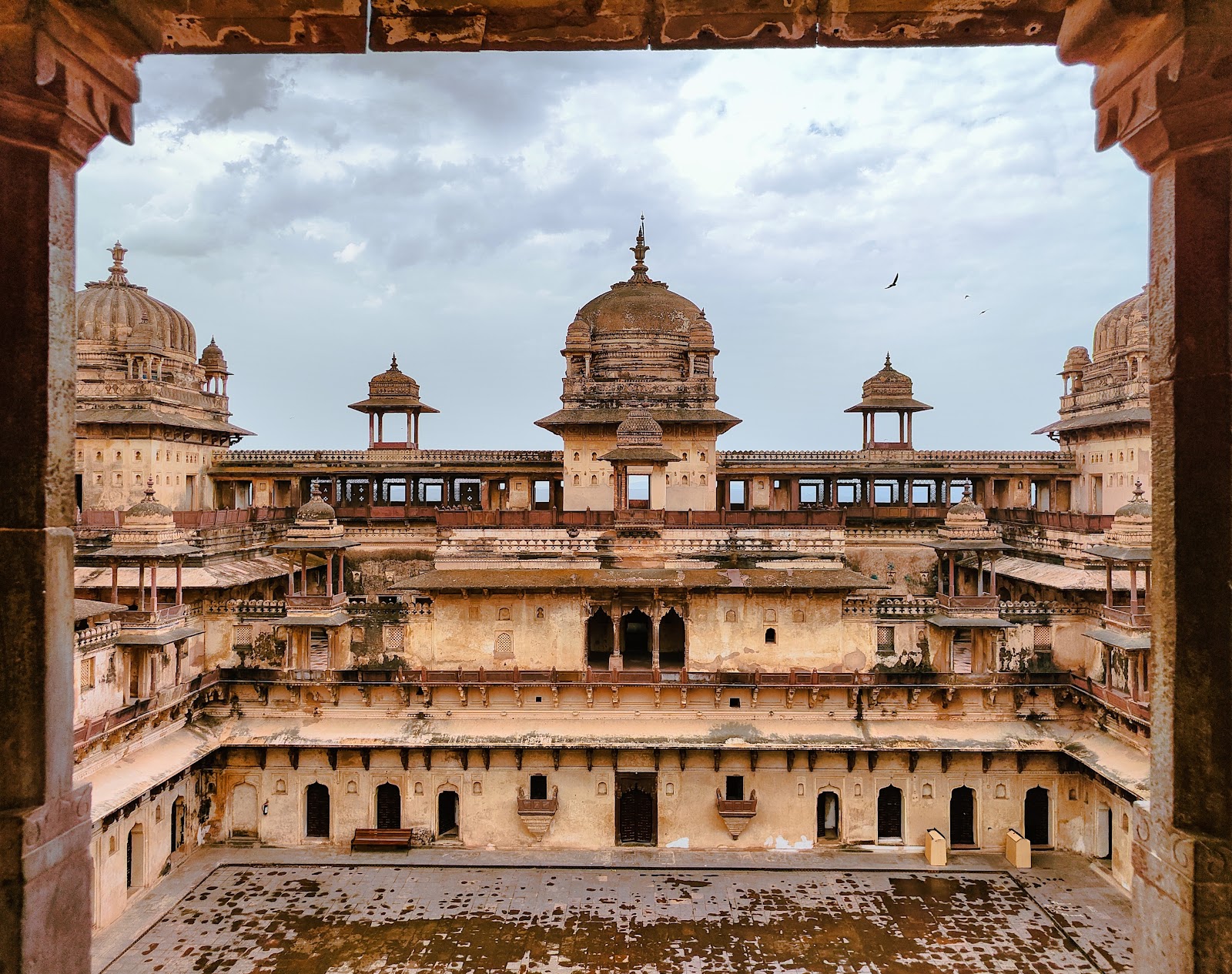
The monsoon had come early to Orchha, a week before the almanac predicted, turning the Betwa River into a churning, muddy titan. Dr. Arin Ghosh, his spectacles misted by the humidity, squinted at the ancient Vishnu temple. Its stone, already scarred by centuries of sun and wind, now wept black streaks with every downpour. He’d arrived from Delhi with a team of six, a grant from the Archaeological Survey of India, and a singular obsession: the lost Emerald Eye of Orchha.
“Sir, the local diggers are refusing to work past sunset,” his junior assistant, Priya Sharma, reported, her voice strained against the drumming rain. “They say the river spirits are angry. And with the recent rains, they’re sure it’s a bad omen.”
Arin sighed, pushing a hand through his already disheveled hair. “River spirits, Priya, or the rising water level making their work impossible?”
Priya, a local girl from Datia, shook her head. “Both, perhaps. But the stories have been more insistent lately. About the Emerald Eye, specifically. They say it’s not merely a jewel, but a… guardian. And it does not wish to be found.”
The Emerald Eye was more than folklore to Arin. It was a tangible piece of history, once a fabled adornment of the Chaturbhuj Temple’s main idol, gifted by Raja Madhukar Shah in the late 16th century. It vanished during the Mughal raids of Aurangzeb’s time, a period of immense upheaval in Bundelkhand. While many treasures were plundered, the Eye’s disappearance was peculiar. There were no accounts of it being taken to Delhi, or melted down. It simply ceased to be.
Arin’s research, spanning two decades, had led him here, to a forgotten corner of Orchha, a small, overgrown Shiva shrine near the confluence of the Betwa and Jamni rivers. An obscure 18th-century manuscript, found in a private collection in Jaipur, hinted at a clandestine burial, a desperate attempt to protect the Eye from invaders. The text, cryptic and poetic, spoke of ‘the eye of the earth, buried where two waters meet, beneath the gaze of the One who dances without fear.’
The ‘One who dances without fear’ was a clear reference to Shiva Nataraja. The Shiva shrine, long abandoned and almost subsumed by the jungle, fit the description perfectly.
“Tell them we’ll resume at first light,” Arin instructed Priya, his gaze fixed on a particular section of the shrine’s crumbling plinth. “And ask Gopal to bring the ground-penetrating radar. I want another scan of that north-eastern corner.”
That night, as the rain lashed against the windows of their temporary guesthouse, Arin reviewed the GPR images. The first scans had shown anomalies, voids beneath the earth that could indicate buried structures. The new scan, however, revealed something more defined: a small, sealed chamber, roughly three feet by four, about six feet beneath the shrine.
His heart quickened. This was it. This had to be it. The centuries of searching, the academic skepticism, the endless bureaucratic hurdles, all leading to this moment.
The next morning, the river, though still swollen, had receded enough for the diggers to work. Under Arin’s direct supervision, they carefully excavated the earth, the scent of damp soil and ancient stone filling the air. By late afternoon, they had uncovered a section of rough-hewn stone, clearly not part of the shrine’s original foundation. It was a lid, covering a chamber.
As the last of the earth was cleared, revealing a dark, square opening, a collective gasp rippled through the workers. A chill, despite the humid air, seemed to emanate from the opening. The local foreman, a grizzled man named Keshav, muttered something in Bundeli about a naga-dwara, a serpent’s gate. His eyes, usually placid, were wide with a fear Arin had only seen in ancient texts describing forbidden places.
“Sir, we cannot go in there,” Keshav said, his voice barely a whisper. “This is not a mere burial. It is a sealing. What rests within, it is not meant for human hands.”
Arin, holding a powerful flashlight, leaned forward, peering into the inky blackness. A faint, earthy smell, unlike anything he’d encountered, drifted up. It was not the smell of decay, nor of stagnant water. It was something deeper, something metallic and strangely sweet, like old copper mixed with a forgotten incense. His scientific mind battled with an inexplicable sense of dread. He dismissed it as the excitement of discovery, the thrill of the unknown.
“Nonsense, Keshav,” Arin said, trying to project confidence. “It’s just an old chamber. We’ll be careful.”
He took a step towards the opening, but Keshav suddenly grabbed his arm, his grip surprisingly strong for his age. “Dr. Ghosh, please. Listen to the earth. It is speaking. There are things even the great Mughals feared. This Eye, it does not just see. It watches. And it remembers.”
Arin shrugged off the old man’s hand, a flicker of irritation crossing his face. “We are archaeologists, Keshav, not superstitious villagers. This is history. We are reclaiming it.” He adjusted his headlamp, took a deep breath, and prepared to descend into the darkness. Priya, though hesitant, moved to follow him, her own flashlight beam wavering.
As Arin’s foot touched the first step, a low, guttural growl echoed from within the chamber. It was not animalistic, not human. It was a sound that seemed to vibrate from the very stone, a deep, resonant hum that made the ground tremble slightly. The air grew heavy, thick with the metallic-sweet scent, now tinged with something acrid, like ozone before a storm. All the diggers, including Keshav, took several steps back, their faces pale with terror. Priya froze, her hand flying to her mouth.
From the depths of the chamber, two pinpricks of emerald green light slowly, steadily, began to glow.