
Technology
Skyroot Vikram-1 succeeds as India's first private orbital rocket
2026-09-24 - ABikram Mondal
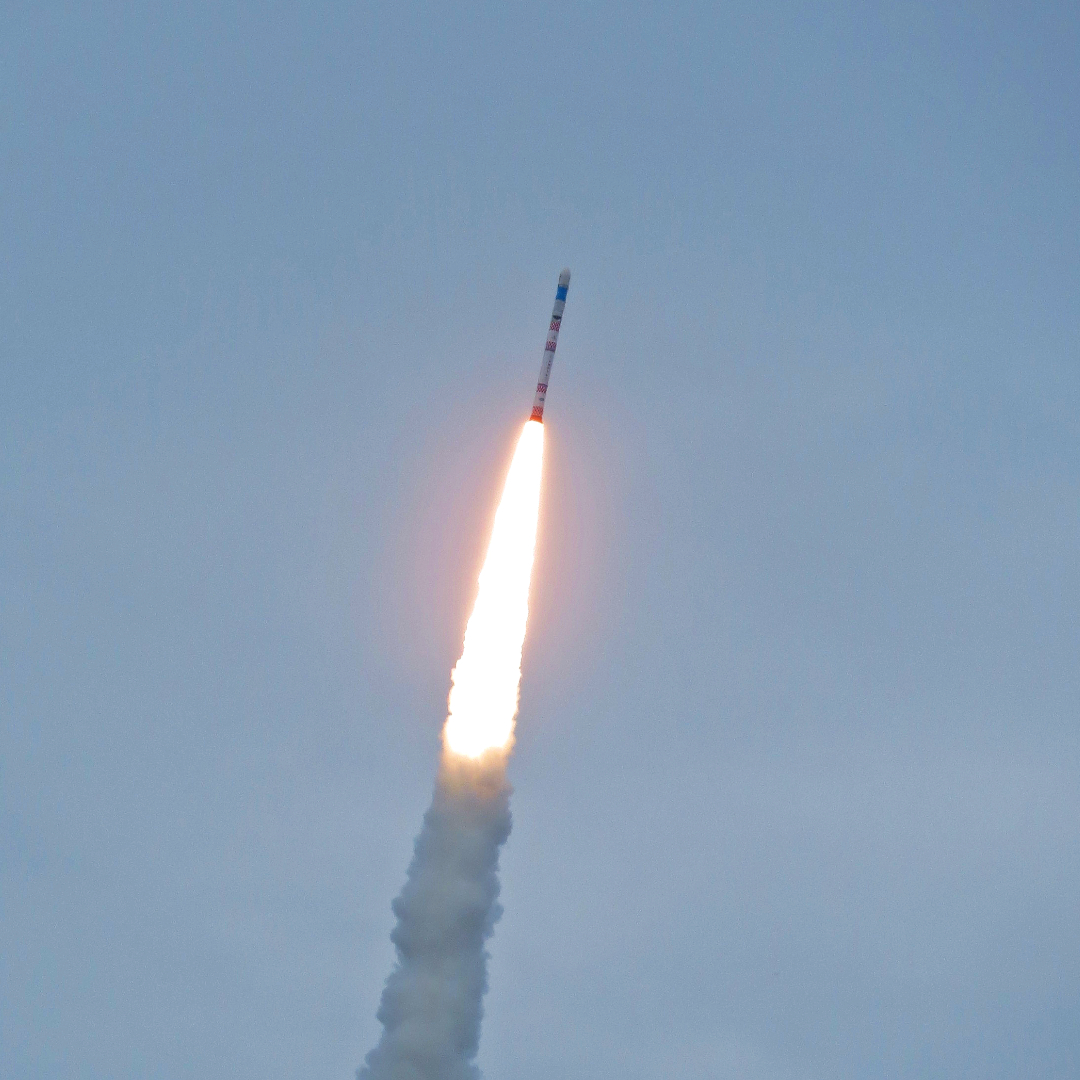
The rocket reaches orbit on its first try
Skyroot Aerospace launched Vikram-1 on Mission Aagaman from the Satish Dhawan Space Centre at Sriharikota. The four-stage vehicle lifted off on July 18 and delivered multiple technology demonstration payloads into a 450 km low Earth orbit at 60 degree inclination. All systems performed as planned and the payloads separated on schedule.
The company described the outcome as a full success. Mission control confirmed orbital insertion roughly 15 minutes after liftoff. This marked the first time an Indian private firm placed objects into orbit under its own rocket.
Payloads included Skyroot's own SCOPE satellite along with contributions from Grahaa Space, Cosmoserve Space and a German partner. Commemorative items also flew. The flight validated the solid-propellant first three stages and the liquid fourth stage for final orbit adjustments.
Prime Minister Narendra Modi met the founders afterward and called the achievement a defining milestone. ISRO Chairman V Narayanan praised the team for advancing India's commercial space presence. The Technology Development Board highlighted the validation of indigenous innovation.
Recent coverage on September 23 and 24 continued to note the lasting impact. Skyroot now moves toward regular rideshare and dedicated missions starting in the fourth quarter of 2026.
Vehicle design and performance numbers
Vikram-1 stands 24 metres tall with a 1.7 metre diameter. It uses three solid stages named Kalam-1200, Kalam-250 and Kalam-100 followed by a liquid upper stage powered by Raman engines. The first stage delivers approximately 1200 kN of thrust.
Stated capacity reaches 350 kg to low Earth orbit at 500 km and 45 degree inclination. Sun-synchronous polar orbit capacity at 500 km stands at 260 kg. The vehicle targets small satellites and technology demonstrators that need dedicated or precise timing.
Launch windows open for rideshares and dedicated flights. Customers can book slots with 30 days notice for payload delivery. The company aims for monthly cadence once reliability data accumulates from repeated flights.
Development drew on earlier suborbital tests with the smaller Vikram-S. The orbital version required four additional years of work after the suborbital success in 2022. In-house production supports close to one vehicle per month.
Closest rivals on paper
Three small-lift vehicles compete directly for the same customer segment. The table below lists verified specifications drawn from company statements and public records.
| Parameter | Vikram-1 (Skyroot) | Electron (Rocket Lab) | SSLV (ISRO) |
|---|---|---|---|
| Height | 24 m | 18 m | 34 m |
| Diameter | 1.7 m | 1.2 m | 2 m |
| Stages | 4 | 2 + kick stage | 3 + upper stage |
| Payload to LEO (approx 500 km, 45 deg) | 350 kg | 300 kg | 500 kg (estimated for light config) |
| Payload to SSPO (500 km) | 260 kg | 200 kg | 300 kg (estimated) |
| First stage thrust | 1200 kN | 224 kN peak | Not publicly detailed for this variant |
| Typical launch price | Not confirmed | $7.5 million | Lower than commercial rates |
Vikram-1 offers more payload than Electron at similar inclinations while remaining smaller than SSLV. Exact pricing for Vikram-1 flights has not been released. Electron carries a public figure of roughly 7.5 million dollars per launch.
What the numbers leave out
The table shows capacity and size. It does not capture schedule flexibility or integration support. Skyroot emphasises dedicated windows and rapid booking compared with rideshare waits of 12 to 18 months on larger vehicles.
Propellant choices differ. Vikram-1 relies on solid motors for the first three stages and hypergolic liquids for the fourth. Electron uses liquid oxygen and kerosene throughout. These choices affect production speed and restart capability.
Customer experience also varies. Skyroot provides satellite integration help and precise orbit placement through the restartable upper stage. How often the vehicle will actually fly remains to be proven beyond the single successful test.
Reusability plans sit further out. Skyroot has spoken about future recovery technology but the current Vikram-1 flies expendable. Electron has demonstrated partial reusability on some missions.
Who gains most from this launch
Indian startups building small satellites now have a domestic option that avoids export control delays on foreign rockets. Constellation operators needing frequent, custom orbits fit the profile.
Defence and government users gain an additional assured supply line. The 98 percent indigenous content target in recent defence buys aligns with a vehicle built entirely in India.
International customers seeking alternatives to crowded manifests on established providers may book rideshares. The 60 degree inclination orbit demonstrated on the first flight opens mid-latitude access from Indian soil.
Investors in Skyroot see validation after the $60 million round that valued the firm at 1.1 billion dollars. Follow-on funding rounds become easier once flight heritage exists.
Next steps for Skyroot and the sector
The company has opened bookings for Q4 2026 and Q1 2027 rideshares. Dedicated missions can be configured around single large payloads up to the full 350 kg limit.
Vikram-1U with strap-on boosters is planned for 2027 to raise capacity toward 550 kg. That vehicle would compete more directly with medium small-lift options.
IN-SPACe continues to grant authorisations to other non-government entities. The total now exceeds 113 approvals across 52 firms including 18 startups. Cumulative private investment reached 618.5 million dollars by March 2026.
ISRO maintains its role in advanced research and large missions while private players handle routine small-satellite traffic. The two tracks run in parallel rather than in competition.
Remaining uncertainties
Only one flight has occurred. Reliability data will come from the next several missions. Any anomaly on the second flight would reset the confidence clock.
Launch cadence depends on production scaling and range availability at Sriharikota. The new Kulasekarapattinam complex may ease pressure once commissioned within six months.
Price competitiveness stays unclear until Skyroot publishes rates. Customers will compare total cost including integration against Electron's known 7.5 million dollar benchmark.
Export market access for Indian-built rockets faces the same regulatory hurdles that apply to any new entrant. Early international payloads on Vikram-1 will test those processes in practice.
Sources
- https://orbital-intel.com/news/skyroot-vikram-1-orbital-launch-july-2026/
- https://orbitalradar.com/launch-vehicles/electron
- https://m.economictimes.com/news/india/pm-modi-hails-indias-space-success-in-virtual-address-to-paris-space-summit/articleshow/134002310.cms
- https://keeptrack.space/deep-dive/rocket-lab-neutron-wallops
- https://www.91mobiles.com/hub/hp-unveils-20-products-in-india-omnipad-eliteboard-omnibook/
- https://forum.nasaspaceflight.com/index.php?action=dlattach;topic=35300.0;attach=1473092;sess=0
- https://www.youtube.com/watch?v=i5TDoWpHItw
- https://economictimes.indiatimes.com/topic/space-technology-mission-directorate
Reported from the sources above on 2026-09-24. Figures are as published at the time of writing. If something here has moved on, the linked source is the one to trust.
If you got here because you are actually thinking about building the site or web app a product like this deserves, fast and search-ready, that is the work I do. I build for founders and small teams who want the thing to exist and work, not a deck about it.