
Technology
DRDO signs deal for India's first indigenous dilution refrigerator
2026-09-26 - ABikram Mondal
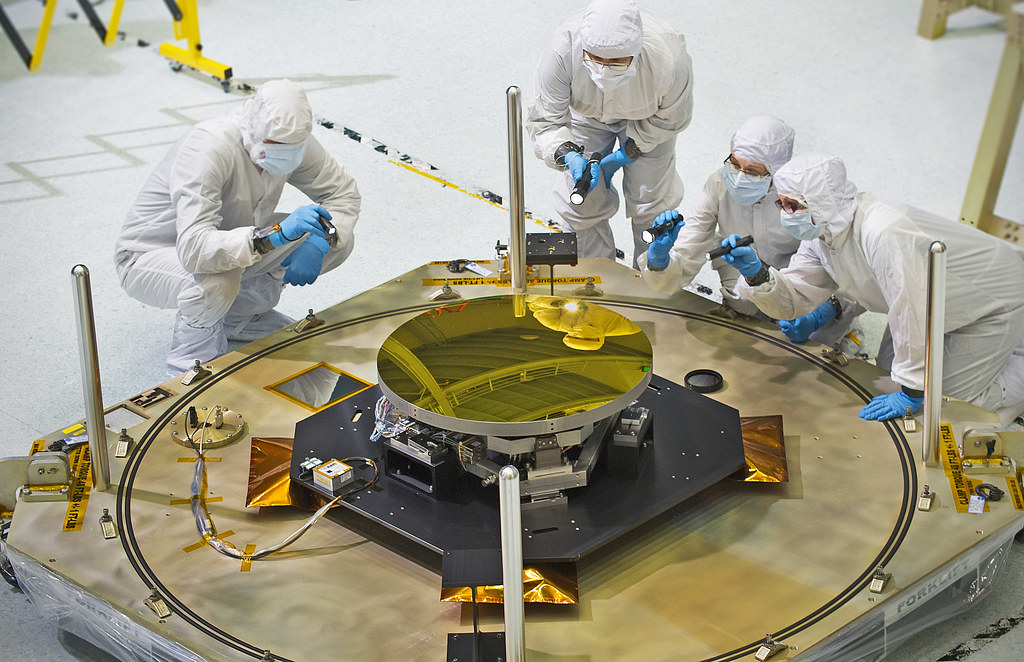
DRDO moves on quantum cooling hardware
DRDO signed an agreement with Zero mK India for development of a dilution refrigerator. The project supports quantum applications and aims to cut reliance on foreign cryogenic systems. Monitoring falls to the director of DRDO's Solid State Physics Laboratory and team. This forms part of a larger Rs 500 crore initiative for deep tech innovations.
The deal marks the first high value Technology Development Fund pact in this area. It targets core infrastructure needed for quantum computing and sensing. Domestic production of such systems reduces import dependence. Work will focus on reliable low temperature performance.
Officials see the refrigerator as foundational for several quantum programmes. The Solid State Physics Laboratory already handles related sensor and device research. Partnership with a private firm brings manufacturing scale. Timeline details remain under discussion between the parties.
Quantum technologies require temperatures near absolute zero. Dilution refrigerators provide the necessary cooling stage. India has imported these units until now. Local development aligns with broader self reliance goals in advanced electronics.
Funding and programme scale
The Rs 500 crore allocation covers multiple deep tech strands. Dilution refrigerator work receives priority within that envelope. Earlier DRDO R&D budgets stood at Rs 13,716 crore in 2014 15. The current figure reaches Rs 29,100 crore according to government data.
Start ups and MSMEs gain entry through Technology Development Fund grants. iDEX routes help match firm solutions to military requirements. The quantum refrigerator effort demonstrates how these channels operate in practice. Private sector involvement speeds prototype to production steps.
DRDO leadership has emphasised integration across the security chain. Detection, tracking and neutralisation all benefit from better quantum sensors. Cryogenic hardware underpins many of those sensors. The new pact directly addresses one bottleneck.
Progress reports will go through established DRDO review channels. Success here could unlock follow on projects in quantum communication and computing. The Rs 500 crore envelope allows phased releases based on milestones.
Technical focus of the refrigerator
A dilution refrigerator achieves millikelvin temperatures through helium isotope mixing. The system must maintain stability for extended periods. Indian developers will adapt designs for local materials and assembly. Reliability under field conditions forms a key requirement.
Zero mK India brings expertise in cryogenic equipment. The firm already supplies semiconductor related systems. Collaboration pairs that experience with DRDO's quantum device knowledge. Joint teams will iterate on cooling power and vibration control.
Integration with existing quantum test beds comes next. The Solid State Physics Laboratory maintains several such facilities. Early prototypes will undergo characterisation there. Data from those tests will guide design refinements.
Longer term the technology supports scalable quantum processors. Current systems remain limited by cooling infrastructure. Domestic supply removes a dependency that has slowed experiments. The agreement includes provisions for technology absorption by Indian industry.
Comparison with international systems
| Parameter | DRDO Zero mK project (target) | Typical imported dilution refrigerator | European commercial unit |
|---|---|---|---|
| Base temperature | Below 10 mK | 10 mK | 8 mK |
| Cooling power at 20 mK | Under development | 400 microwatt | 500 microwatt |
| Cost (approximate) | Domestic target lower | Rs 5 crore plus | Euro 4 million |
| Local content | High | Low | Medium |
Numbers for the DRDO project remain targets until prototypes complete testing. Imported units carry high costs and lead times. Domestic development seeks to match or exceed performance while lowering both. Actual figures will emerge only after verification rounds.
European suppliers dominate the current market. Their units deliver proven reliability but at premium prices. Indian effort focuses on cost effective alternatives suited to local supply chains. Success would open export potential in addition to domestic use.
Vibration isolation and automation features also matter for quantum work. The partnership will address these alongside core cooling. Field deployment considerations differ from laboratory only designs.
What the specs leave out
Performance numbers alone do not capture integration challenges. Quantum devices often suffer from electromagnetic interference. The refrigerator design must minimise that noise. Engineers will test full system behaviour rather than isolated cooling.
Maintenance requirements and spare part availability receive equal weight. Imported systems sometimes face long delays for repairs. Local manufacturing promises faster support once production stabilises. Training for operators forms another unlisted factor.
Scalability to larger quantum systems remains an open question. Single unit performance tells only part of the story. Future clusters will need coordinated cooling solutions. The current project lays groundwork for those expansions.
Export controls on advanced cryogenics add another layer. Domestic capability bypasses some of those restrictions. It also builds a skills base for related technologies such as superconducting electronics.
Who stands to gain
Indian quantum research groups gain immediate access to more units. Academic and defence labs have waited on imports. Faster iteration cycles become possible. The Rs 500 crore envelope supports multiple parallel efforts.
Private firms in the cryogenic and semiconductor space see new opportunities. Zero mK India expands its portfolio. Other suppliers can join later stages of the supply chain. MSME participation grows through the Technology Development Fund route.
Defence applications in sensing and secure communication benefit over time. Quantum advantages appear first in niche high value roles. Broader computing uses follow once hardware matures. The refrigerator removes one practical barrier.
Policy makers note the alignment with semiconductor and deep tech pushes. Earlier chip supply deals and module launches create complementary infrastructure. Quantum work adds another dimension to the overall strategy.
Next steps and timeline outlook
Prototype development begins under the signed agreement. The Solid State Physics Laboratory will oversee initial characterisation. Milestone based funding releases keep the project on track. Updates will appear through official DRDO channels.
Industry observers watch for similar pacts in related areas. Quantum memory and control electronics represent logical follow ons. The current deal demonstrates the mechanism works. Replicating it across other components accelerates the ecosystem.
International collaboration remains possible in non sensitive layers. Core cooling technology stays indigenous. This balance supports both security and performance goals. The Rs 29,100 crore R&D allocation provides headroom for such choices.
Readers interested in related engineering challenges can explore how ABikram Mondal builds web development for exactly this kind of problem at https://abikrammondal.com/services/web-development.
Sources
- https://spaceflightnow.com/tag/falcon-9/page/94/
- https://www.thedefensenews.com/search.php?pageno=27
- https://spaceflightnow.com/2025/09/25/live-coverage-spacex-to-launch-28-starlink-satellites-on-falcon-9-rocket-from-cape-canaveral-13/
- https://www.business-standard.com/topic/drdo
- https://www.akingump.com/a/web/2deTR8xZ3HLCWWFp2G9ZNq/ey4Bh6/space-law-regulation-and-policy-update-september-22-2026.pdf
- https://www.defencewatch.in/ministry-of-defence/drdo
- https://economictimes.indiatimes.com/topic/cryogenic-system
- https://spaceflightnow.com/author/stephen-clark/page/393/
Reported from the sources above on 2026-09-26. Figures are as published at the time of writing. If something here has moved on, the linked source is the one to trust.
If you got here because you are actually thinking about building the site or web app a product like this deserves, fast and search-ready, that is the work I do. I build for founders and small teams who want the thing to exist and work, not a deck about it.