
Technology
DRDO 30kW laser weapon moves to production partner search
2026-09-22 - ABikram Mondal
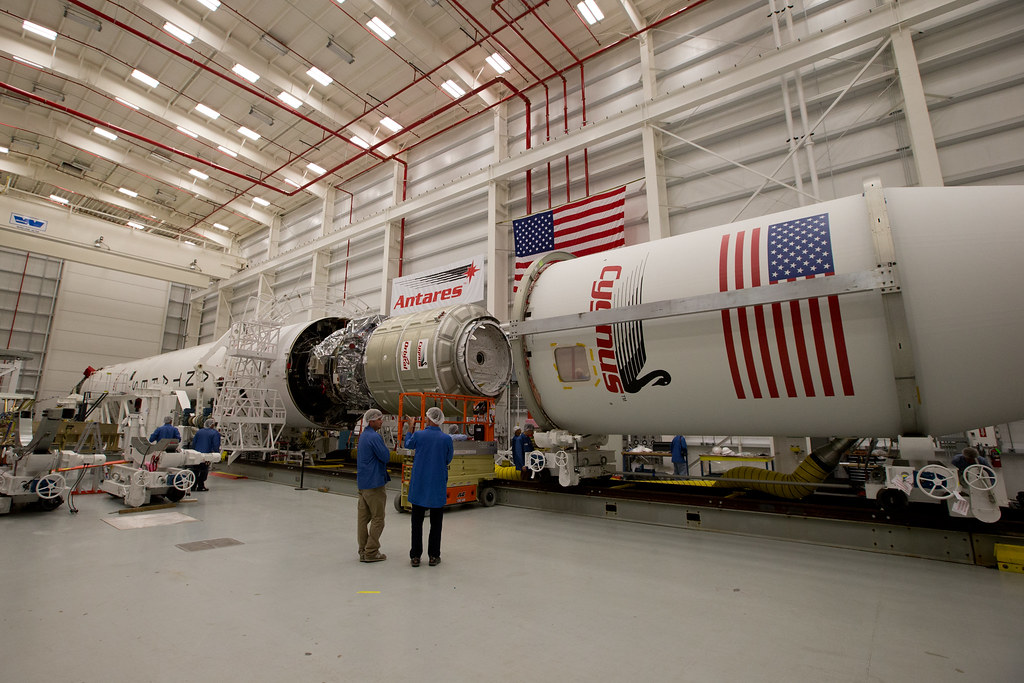
DRDO readies 30kW laser for factory floor
Defence Research and Development Organisation officials confirmed on 21 September 2026 that an expression of interest for a production partner will go out within six months. The first-of-production model for the 30kW directed-energy weapon should reach completion inside one year, according to BK Das, director general of electronics and communication systems at DRDO.
The truck-mounted system forms part of the Integrated Drone Detection and Interdiction System Mk-IIA programme. It targets drone swarms, fixed-wing unmanned aerial vehicles and ground sensors through both soft-kill electronic disruption and hard-kill physical damage.
Trials at the National Open Air Range in Kurnool, Andhra Pradesh, took place in April 2025. The weapon engaged fixed-wing drones at distance, defeated a simultaneous multi-drone attack and disabled surveillance antennae and sensors. Final technology validation wrapped up in August 2025.
Power comes from six individual 5kW laser modules arranged in a 2x3 configuration. The complete assembly rides on a standard military truck chassis for rapid redeployment along borders or critical sites.
India already fields earlier DRDO lasers in smaller power classes. A 2kW version operates along the Line of Control with roughly 1km hard-kill reach. A 10kW variant cleared induction with 1.5 to 2km capability and ten to twelve units approved under the same programme.
Real numbers on the spec sheet
The 30kW system lists a maximum engagement range of 5km against the listed target set. That figure comes directly from DRDO statements reported by India Sentinels and Outlook India.
Response time sits at the speed of light once the beam locks. No ammunition magazine limits apply, only electrical power and cooling constraints.
Soft-kill mode jams or blinds sensors at greater distances than hard-kill ablation. The same hardware switches modes depending on threat type and rules of engagement.
Platform mobility remains a stated requirement. The truck mount allows the unit to keep pace with armoured formations or shift between static sites without heavy lift assets.
Closest rivals compared
| Parameter | DRDO Mk-IIA 30kW | China LW-30 | US LOCUST X3 / E-HEL |
|---|---|---|---|
| Output power | 30kW (6x5kW modules) | 30kW | 20-35+kW scalable |
| Stated range | 5km | 4km | Not publicly detailed for production model |
| Platform | Truck-mounted | Mobile and stationary variants | Ground-based, vehicle integrable |
| Primary targets | Drone swarms, fixed-wing UAVs, sensors | Low-altitude UAVs, RAM, photoelectric systems | Group 1-3 drones up to Shadow size |
| Status (Sept 2026) | FOPM expected in one year, EoI in six months | In service or near deployment | Production contract awarded Sept 2026, first units within one year |
| Source | DRDO via India Sentinels, Outlook | Manufacturer data | US Army contract reports |
The table draws only from publicly reported figures in the cited sources. Exact beam quality, atmospheric performance and cost per engagement remain classified across all three programmes.
What the numbers leave out
Atmospheric turbulence, dust, rain and smoke all degrade laser performance in real conditions. Indian trials occurred at a dedicated open-air range under controlled schedules. Field units will face variable weather across deserts, mountains and coastal zones.
Power generation and thermal management on a mobile platform add weight and complexity. The six-module design helps distribute heat, yet sustained firing still demands robust vehicle electrical systems.
Target tracking and beam steering must maintain lock on fast, manoeuvring drones. Earlier lower-power versions proved the concept at shorter ranges. Scaling to 30kW increases the challenge of maintaining focus at 5km.
Integration with existing air-defence networks such as Sudarshan Chakra will determine operational value. A lone laser unit achieves little without radar cueing, command links and rules that allow rapid engagement decisions.
Production path and industry role
DRDO plans to issue the expression of interest to select one or more manufacturing partners. Previous lower-power systems moved to Bharat Electronics Limited for series production.
The approach mirrors recent DRDO policy of handing mature designs to industry for volume output. Over 2300 technology transfers have already occurred to more than 1100 firms, the ministry stated at the September 2026 VIMARSH meet.
Private participation should accelerate delivery timelines and create parallel production lines. The ministry has also lowered entry barriers for MSMEs through dedicated funding windows and access to DRDO test facilities.
Exact unit cost remains undisclosed. Laser weapons generally promise far lower cost per shot than missiles once the capital equipment is fielded.
Who actually needs this system
The Indian Army and Air Force face persistent low-cost drone threats along multiple borders. A mobile 5km hard-kill laser fills a gap between short-range guns and expensive surface-to-air missiles.
Border outposts and critical infrastructure sites stand to benefit first. The truck mount allows quick repositioning when threat axes shift.
Export potential exists once the system matures and clears user trials. Several countries already operate or develop comparable directed-energy weapons, yet few have reached routine field deployment at this power level.
Success hinges on reliable power supply in forward areas, trained crews and seamless data links to wider surveillance grids. The hardware demonstration is complete. The harder work of turning it into dependable, maintainable equipment now begins.
Next milestones to watch
The expression of interest timeline starts the clock on partner selection. Six months from 21 September places that step around March 2027.
First-of-production model delivery inside twelve months would allow user trials to begin in late 2027 or early 2028. Those trials will validate real-world range, reliability and integration claims.
Parallel work on higher-power follow-ons continues under DRDO’s multi-year roadmap. The 30kW class serves as the immediate production focus for counter-drone roles.
Defence Acquisition Council approvals for larger numbers of these systems would signal formal induction plans. Budget allocation and regiment-level training pipelines will follow.
Sources
- https://www.financialexpress.com/about/drdo/
- https://www.indiandefensenews.in/search/label/Semi
- https://nextgendefense.com/china-laser-weapon-drone/
- https://www.congress.gov/crs-product/IF11882
- https://en.wikipedia.org/wiki/Integrated_Drone_Detection_%26_Interdiction_System
- https://www.autonocion.com/us/american-laser-30-kilowatts-burns-drones/
- http://defence.economictimes.indiatimes.com/news/research-security/drdo-widens-industry-push-with-nine-tech-transfers-to-13-partners/134278844
- https://economictimes.indiatimes.com/topic/iisc-isro-iits-drdo
Reported from the sources above on 2026-09-22. Figures are as published at the time of writing. If something here has moved on, the linked source is the one to trust.
If you got here because you are actually thinking about building the site or web app a product like this deserves, fast and search-ready, that is the work I do. I build for founders and small teams who want the thing to exist and work, not a deck about it.