
The Barisal Guns: Bengal's Unseen Booms
Unexplained - ABikram Mondal
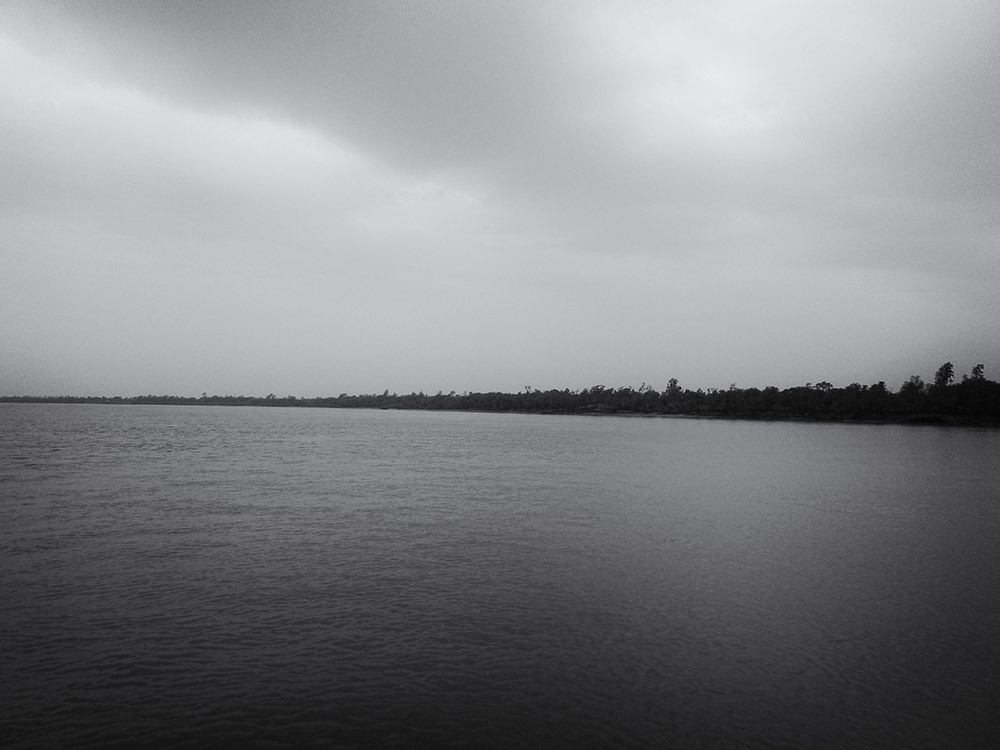
Echoes Over the Delta
It was the late 19th century, and the residents of Barisal, a major city in the Bengal delta (now in Bangladesh), were growing accustomed to a peculiar phenomenon. From the vast, watery expanse of the Sundarbans mangrove forest to the bustling riverbanks, a deep, resonant boom would occasionally ripple through the air. Not the crash of thunder, nor the distant rumble of artillery, these sounds were distinct, powerful, and entirely without a visible source. Locals dubbed them the 'Barisal Guns'.
The sounds weren't unique to Barisal. Similar reports had surfaced from other parts of the Ganges delta, stretching across what is now West Bengal in India and Bangladesh. Early British colonial administrators and naturalists, intrigued by these unexplained atmospheric disturbances, began documenting them. Publications like the Calcutta Review and various geological surveys of the era made note of these 'skyquakes' (a term that would gain wider currency much later). Descriptions varied, but the core experience was consistent: a loud, percussive sound, like a cannon firing, but with no smoke, no flash, and no discernible origin point.
Documenting the Undocumented
One of the earliest detailed accounts came from Lieutenant-Colonel J.T. Wilson, who in 1890, while stationed in the region, recorded his observations of the Barisal Guns. He described them as 'muffled reports, like those of heavy ordnance fired at a distance'. Other accounts spoke of sounds so intense they could rattle windows, yet seemingly emanate from everywhere and nowhere at once. This isn't a phenomenon confined to historical records either. Even in recent decades, intermittent reports of similar unexplained booms have emerged from the Bengal delta, suggesting an ongoing, if sporadic, mystery.
What makes the Barisal Guns particularly compelling is their persistence and the consistent nature of the reports over such a long period. Unlike isolated incidents that might be attributed to local folklore or misidentification, this was a widespread and repeated occurrence across a specific geographical area, noted by a variety of observers from different backgrounds. It fits squarely into the global phenomenon of 'skyquakes' (or sometimes 'mistpouffers' in Europe, or 'brontides' in other regions) – mysterious sonic events that defy easy explanation.
Theories and Explanations
For a phenomenon as enduring as the Barisal Guns, several theories have naturally emerged over time, attempting to provide a rational explanation for these disembodied booms. It's important to separate these proposed explanations from established fact, as none have definitively resolved the mystery.
Seismic Activity
One prominent theory points to seismic activity. The Bengal delta sits in a geologically active region, relatively close to the collision zone of the Indian and Eurasian tectonic plates. Shallow earthquakes, or even micro-earthquakes too small to be widely felt as tremors, can sometimes produce low-frequency sounds that travel through the ground and air. These sounds might be perceived as distant booms. However, many reported instances of the Barisal Guns did not coincide with known seismic events, and the nature of the sound (often described as 'cannon-like' rather than a rumble) doesn't always align perfectly with typical earthquake sounds.
Meteorological Phenomena
Another line of thought focuses on meteorological explanations. Some researchers suggest that certain atmospheric conditions, perhaps involving temperature inversions or specific wind patterns, could cause distant sounds (like thunder from far-off storms, or even large waves crashing on a coast) to travel exceptionally long distances and be heard in unexpected ways. The unique topography of the delta, with its vast flat plains and numerous waterways, might also play a role in sound propagation. However, this theory struggles to account for the sheer power and localized nature of some reports, or why these specific conditions would consistently produce such loud, unexplained booms in this region more than others.
Underwater Gas Release
Given the delta's watery environment, another intriguing hypothesis involves the release of gas from beneath riverbeds or marshlands. Methane or other gases, trapped under sediment, could suddenly escape, creating a powerful 'burp' that would generate a loud, explosive sound. This concept is sometimes linked to 'mud volcanoes' or other forms of geological venting. While plausible for some instances, it would require significant, localized gas pockets and specific geological conditions that haven't been widely documented as correlating with every Barisal Gun event.
Other Possibilities
Less common theories include the possibility of distant military exercises (though this would not explain 19th-century reports), sonic booms from aircraft (an anachronism for most documented cases, but perhaps relevant for modern reports), or even large-scale landslides or collapses of riverbanks that could generate significant noise. Naturally, more speculative ideas sometimes enter the conversation, though they lack scientific backing. These might include electromagnetic phenomena, or even sounds from unknown deep-sea creatures (though the Barisal Guns are decidedly atmospheric).
The Enduring Question
The Barisal Guns remain a classic example of an unexplained environmental phenomenon. They are not isolated anecdotes but a series of documented events spanning generations, reported by credible witnesses. While scientific theories offer potential explanations, none have fully or consistently accounted for every aspect of these mysterious booms. The precise mechanism, or combination of mechanisms, that creates these 'skyquakes' in the Bengal delta continues to elude a definitive answer.
What is it about this particular region that seems to foster such a recurring auditory mystery? Or are these phenomena far more widespread than we realize, simply better documented and remembered in places like Barisal? As the quiet nights fall over the vast delta, one can only wonder if, somewhere in the distance, another unseen cannon is about to fire.
Sources and further reading
- Barisal Guns - Vocal
- What Skyquakes Are and How They Work - ThoughtCo
- Mystery booms: What’s the cause? - BBC
- Scientists Grapple to Explain Mysterious ‘Skyquake’ Noises Heard Across the World - Explorersweb »
- Background reference: The Barisal Guns
A factual retelling drawn from public reporting on a real case. Where a claim is unproven, it is flagged. Please verify with the linked sources.