
The Enduring Mystery of Subhas Chandra Bose's Disappearance
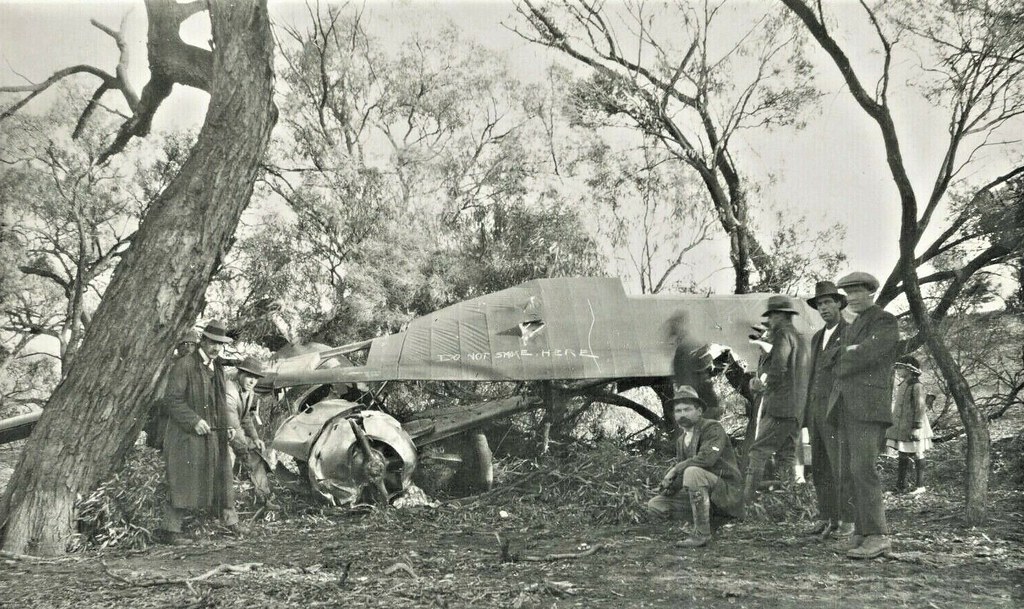
The Last Flight from Taipei
It was August 18, 1945. The world was still reeling from the end of World War II, a conflict that had redrawn maps and reshaped destinies. In Taipei, then Taihoku, a Japanese bomber was preparing for takeoff. On board was Subhas Chandra Bose, a towering figure in India's independence movement, often called Netaji. He was reportedly en route to Dairen (now Dalian, China), and then possibly the Soviet Union, seeking continued support for his fight against British rule. What happened next, or rather, what is officially claimed to have happened, has fueled one of India's most persistent and passionately debated mysteries for nearly eight decades.
Official records, primarily from Japanese and British investigations, state that the plane crashed shortly after takeoff from Matsuyama Airfield (now Taipei Songshan Airport). Bose was said to have suffered severe burns and died hours later in a military hospital. His ashes, according to this narrative, were then transported to Tokyo and interred at the Renkoji Temple. This account forms the bedrock of the official stance adopted by successive Indian governments for many years. It's a clear, concise narrative, but its clarity is precisely what many find suspicious.
A Death Without Definitive Proof?
The problem with the official narrative isn't just a matter of disbelief; it's a lack of irrefutable, independently verifiable evidence. While there were purported witnesses to the crash and Bose's subsequent death, the circumstances have always been murky. No conclusive identification of his remains was ever made. The body reportedly cremated was never subjected to modern forensic examination. This absence of definitive proof, coupled with the political climate of the time, immediately opened the door to alternative theories.
Consider the timing. Bose was a fiercely independent leader, often at odds with both the British and, at times, even Mahatma Gandhi's non-violent approach. His disappearance at the cusp of Indian independence, a time of immense political upheaval, made him a potent symbol. For many, the idea that he simply perished in a routine plane crash seemed too convenient, too neat an end for such a complex figure.
Over the years, numerous inquiries have been launched by the Indian government. The first was the Shah Nawaz Committee in 1956, followed by the Khosla Commission in 1970. Both concluded that Bose had indeed died in the Taipei plane crash. However, their findings never fully satisfied a significant portion of the public, or indeed, members of Bose's own family. Critics of these commissions often point to what they perceive as incomplete investigations, reliance on potentially biased testimonies, and a failure to address contradictory evidence.
The Enduring Counter-Narratives
So, if he didn't die in the crash, what did happen to Netaji? This question has spawned a multitude of theories, some more plausible than others, but all rooted in the ambiguity surrounding the official account.
One prominent theory suggests that Bose survived the crash, or that the crash itself was a ruse. Proponents of this view often claim he escaped to the Soviet Union, perhaps as part of a clandestine agreement, and lived there for many years, possibly even in captivity. This theory gained traction due to reports of sightings in Russia and the persistent belief that Bose would have continued his political activities had he been alive. Declassified files from Taiwan, released years later, did not conclusively confirm the crash, adding fuel to this particular fire. Some documents reportedly stated no such crash occurred in Taiwan on that date, a direct contradiction to the official narrative. These files, however, are also subject to interpretation and debate, and some experts argue they do not definitively disprove the crash either.
Another significant thread of speculation revolves around the possibility of Bose living anonymously in India as an ascetic, a 'sadhu'. This theory gained considerable attention with the emergence of 'Gumnami Baba' (the anonymous saint) in Faizabad, Uttar Pradesh, in the 1980s. Many believed this reclusive figure, who was said to possess knowledge of Bose's life and belongings, was Netaji himself. After Gumnami Baba's death, his belongings, including letters and photographs, were scrutinized, but no definitive DNA evidence or other proof ever established him as Bose. The Mukherjee Commission, appointed in 1999, investigated this claim, and while it ruled out Gumnami Baba as Bose, it also concluded, controversially, that Bose did not die in the 1945 plane crash.
The Mukherjee Commission's finding that Bose did not die in the crash directly contradicted the earlier government inquiries, creating an official impasse. This commission's report was ultimately rejected by the Indian government in 2006, reaffirming the original stance. This rejection, for many, underscored the government's perceived reluctance to fully address the inconsistencies in the case.
Decades of Unanswered Questions
The controversy surrounding Subhas Chandra Bose's disappearance isn't confined to historical debates. It continues to impact contemporary discourse in India. Each year, on August 18th, protests erupt from various groups and family members who reject the notion of his death on that date. Tributes on social media by government bodies on his 'death anniversary' often spark outrage and renewed calls for transparency. Bose's family members have consistently demanded a Special Investigation Team (SIT) probe, arguing that existing inquiries have been insufficient and that the government holds classified information it has yet to release.
The debate is further complicated by the political significance of Netaji's legacy. He remains a powerful symbol of Indian nationalism and courage. Different political factions have, at various times, attempted to appropriate his memory, leading to accusations of politicizing a sensitive historical issue. The call for the return of his purported ashes from Renkoji Temple in Japan has been a recurring demand, with his daughter, Anita Bose Pfaff, even backing a plea in the Supreme Court for their return. However, many in the family and public refuse to accept these ashes as genuinely belonging to Netaji, demanding irrefutable scientific proof.
Eight decades have passed since the fateful day in Taipei. The fog of war, the secrecy of intelligence agencies, and the passage of time have made a definitive answer increasingly elusive. What truly transpired on that summer day in 1945, and where did Subhas Chandra Bose ultimately go?
Sources and further reading
- Eight decades after Netaji disappeared, his daughter backs plea in SC for return of ashes - The Indian Express
- Controversy in West Bengal over PIB news on ‘Netaji’ - The Hindu
- Declassified Taiwan files and the mystery behind Netaji's death | Exclusive - India Today
- Netaji's family reject Centre's RTI reply; demand SIT probe on his disappearance - The New Indian Express
- Protests after tweet tributes to Netaji Subhas Chandra Bose on ‘death anniversary’ - The Times of India
- No crash in Taiwan: Netaji did not die there - PGurus
- Background reference: The disappearance of Subhas Chandra Bose
A factual retelling drawn from public reporting on a real case. Where a claim is unproven, it is flagged. Please verify with the linked sources.