
Roopkund's Skeletal Lake: An Unfolding Himalayan Mystery
Unexplained - ABikram Mondal
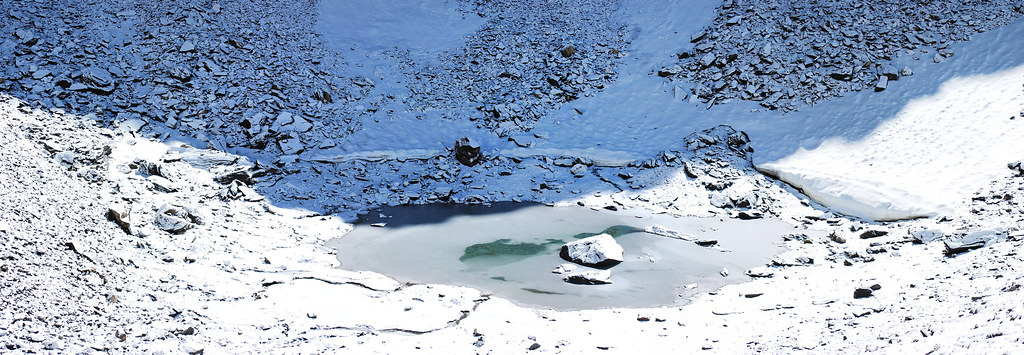
Roopkund's Silent Guardians
At an altitude of 5,029 metres (16,499 feet) in the Uttarakhand region of the Indian Himalayas, lies Roopkund Lake. For much of the year, its icy waters conceal a profoundly unsettling secret. When the snow melts, typically for about a month each year, the lake reveals hundreds of human skeletons, scattered along its banks and beneath its clear, shallow waters. This site, often referred to as Skeleton Lake, has fascinated and baffled researchers for decades.
The discovery of these remains dates back to 1942, when a British forest guard, H.K. Madhwal, stumbled upon them. The immediate assumption, given the ongoing Second World War, was that these were the remains of Japanese soldiers. However, a rapid investigation debunked this, revealing the bones were far older and belonged to groups of people who had perished together in this remote, unforgiving landscape. Early theories suggested a single catastrophic event, perhaps a sudden, violent hailstorm, had claimed the lives of a pilgrimage group or a trading caravan around the 9th century.
The Initial Assessments and Local Lore
For many years, the prevailing narrative was one of a single, tragic incident. Local folklore, passed down through generations, spoke of a goddess, Nanda Devi, enraged by a group of pilgrims who had disrespected her sacred abode. The legend recounts a devastating hailstorm, with hailstones as large as cricket balls, that wiped out the entire party. This explanation, while dramatic, aligned somewhat with the visual evidence of hundreds of individuals seemingly perishing at once.
Archaeological assessments conducted over the years seemed to support the idea of a single event. Some skeletons showed signs of perimortem fractures on the skull, consistent with blunt force trauma, which could have been inflicted by large hailstones. The preservation of many bodies, due to the cold, dry air and low oxygen levels at such high altitudes, allowed for some initial analyses. However, the exact timeline and the identities of those who died remained largely speculative, relying heavily on contextual clues and cultural narratives.
A Deeper Dive: The 2019 Genetic Study
The mystery of Roopkund deepened considerably with the publication of a comprehensive genetic study in 2019. Researchers from the CSIR-Centre for Cellular and Molecular Biology in India, along with collaborators from the USA and Germany, analyzed the ancient DNA from 38 individuals recovered from the lake. The findings challenged nearly everything previously assumed about the site.
The study revealed that the skeletons did not all belong to a single group, nor did they perish at the same time. Instead, the remains represented at least three distinct genetic clusters, dying at vastly different periods. The largest group, comprising 23 individuals, showed genetic ancestry typical of present-day populations in South Asia. Radiocarbon dating placed their deaths between the 7th and 10th centuries CE. This group aligns broadly with the long-held theory of a local pilgrimage or trade group.
The Mediterranean Connection and Other Origins
What truly stunned researchers was the discovery of a second, significantly different genetic group. This cluster, consisting of 14 individuals, showed genetic profiles consistent with people from the eastern Mediterranean, specifically from regions like Greece and Crete. Furthermore, their deaths were dated much later, to sometime between the 17th and 20th centuries CE, a full millennium after the South Asian group. There was also a single individual with Southeast Asian ancestry, whose death was dated to roughly the same period as the Mediterranean group.
This finding completely upended the single-event hypothesis. It indicated that Roopkund Lake had been a site of multiple, distinct mortality events, separated by centuries. The presence of individuals with Mediterranean ancestry in such a remote Himalayan location, centuries ago, introduces a profound new layer of questions. How did these individuals travel to this isolated lake? What was their purpose? Was it trade, exploration, or something else entirely? The study offered no clear answers, only further complexity.
Unanswered Questions in the High Himalayas
Despite the advancements in genetic analysis, Roopkund Lake remains an enduring enigma. The 2019 study provided crucial facts about the origins and timelines of the deceased, but it did not explain the circumstances of their deaths. While the initial South Asian group might still fit the 'catastrophic hailstorm' narrative, it becomes less likely to explain multiple, geographically distinct groups dying in the same location over centuries.
The lake is on a traditional pilgrimage route to the Nanda Devi shrine, which might explain some of the traffic to the area. However, the presence of Mediterranean individuals suggests routes or motivations that are not yet understood. The harsh environment itself is a major factor; hypothermia, avalanches, or other natural disasters are constant threats in the high Himalayas. Yet, the pattern of deaths, particularly the later groups, is still unexplained.
Researchers continue to analyze the isotopes in the bones, which can reveal details about diet and geographical movements during life. Perhaps future studies will offer more clues about the lives, journeys, and ultimately, the fates of those who came to rest in Roopkund Lake. But for now, the high mountain lake holds its secrets close, its hundreds of skeletons bearing silent witness to multiple, unexplained tragedies across a thousand years. What brought such diverse groups to this remote, unforgiving place, only to meet their end together, yet apart?
Sources and further reading
- The hundreds of human skeletons scattered around Roopkund Lake at 5,029 metres in the Indian Himalayas were long assumed to be the remains of a single 9th-century pilgrimage group killed by a sudden hailstorm, in an explanation that a 2019 peer-revie - Space Daily
- Roopkund mystery: The untold story behind India’s Skeleton Lake. Watch the video - IndulgExpress
- In 2019, geneticists tested bones from Roopkund Lake, showing the Himalayan skeletons came from very diff - The Times of India
- India’s lake of mystery: 1200-year-old lake in Uttarakhand has hundreds of skeletons. Scientists are still - The Economic Times
- Ancient DNA from the skeletons of Roopkund Lake reveals Mediterranean migrants in India - Nature
- New Historical Matches Could Connect You to the Mysterious Skeletons of Roopkund Lake - 23andMe
- Background reference: Roopkund Skeleton Lake
A factual retelling drawn from public reporting on a real case. Where a claim is unproven, it is flagged. Please verify with the linked sources.