
The Megaliths of Xiangkhoang: The Unsolved Enigma of the Plain of Jars
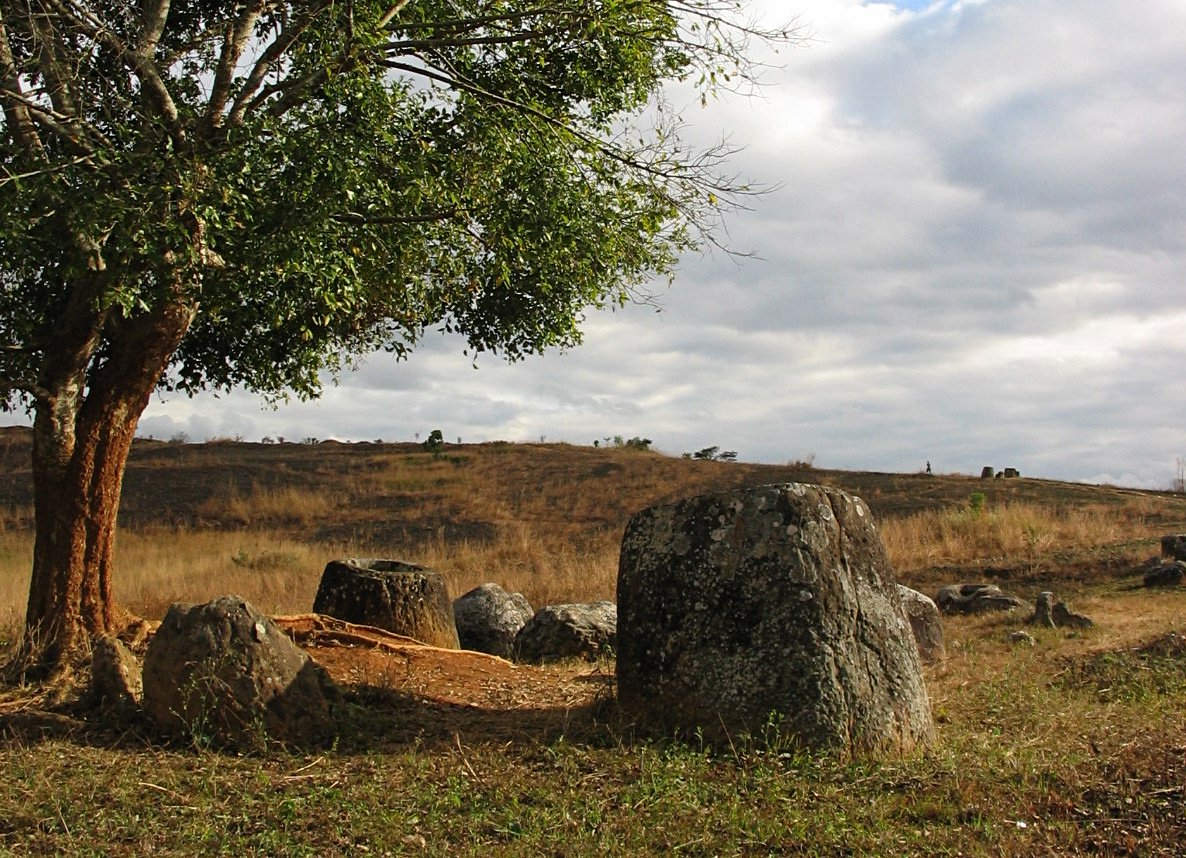
Across the undulating highland plateau of Xiangkhoang in northern Laos lie thousands of gigantic hollowed stone vessels, weighing up to fourteen metric tons each. Scattered across ninety distinct geographic clusters over hundreds of square kilometers, this enigmatic megalithic landscape—known globally as the Plain of Jars—represents one of Southeast Asia's most baffling and hazardous archaeological riddles.
What is the Plain of Jars and Who Built It?
Dating primarily to Southeast Asia's Iron Age (roughly 500 BCE to 500 CE), the Plain of Jars features over 2,100 carved megalithic stone jars, circular stone discs, and burial markers. The jars are chiseled predominantly from solid sandstone, with smaller groupings fashioned from granite, conglomerate, and calcified limestone. Many of these quarries lie dozens of kilometers away across rugged mountainous ravines, raising deep engineering questions about how ancient builders transported multi-ton monolithic cylinders across mountainous terrain without draft animals or modern machinery.
Local Lao folklore speaks of an ancient race of giants ruled by the heroic king Khun Cheung, who allegedly commissioned the colossal stone vessels to brew and store copious amounts of celebratory rice wine (lao hai) following a triumphant military conquest. Yet archaeological research tells a vastly different and far more solemn story.
What Do Archaeological Excavations Reveal About Prehistoric Burial Rites?
Pioneering excavations conducted by French archaeologist Madeleine Colani in the 1930s uncovered burnt bone fragments, glass beads, bronze bangles, and ceramic funerary vessels in proximity to the jars. Subsequent modern research led by joint Lao-Australian archaeological expeditions utilized Optically Stimulated Luminescence (OSL) dating on underlying sedimentary quartz grains, revealing that the stone jars were positioned in their current locations between the late second millennium BCE and the early first millennium CE.
Archaeologists hypothesize that the megalithic jars served as mortuary chambers for a multi-stage excarnation and burial ritual:
- Initial Decomposition: Deceased high-status individuals were placed within the open stone jars to decompose under the subtropical elements.
- Secondary Burial: Once skeletonized, the remaining bones were retrieved, cremated or bundled into ceramic urns, and re-interred in subterranean pits adjacent to the jars.
- Acoustic and Astrological Alignments: Recent LIDAR surveys indicate that primary jar clusters align with cardinal sunrise vectors during the winter solstice and follow natural subterranean groundwater fault lines.
Why Does the Mystery of Xiangkhoang Remain Unsolved?
Despite being declared a UNESCO World Heritage site in 2019, fewer than ten percent of all known jar sites have been systematically excavated. The reason is tragic: during the Secret War (1964–1973), the Xiangkhoang plateau became one of the most heavily bombed regions on Earth, littered with millions of unexploded cluster ordnance (UXO). Decades of painstaking mine clearance have only rendered three main sites safe for visitors and researchers.
Who were the architects of these megaliths? What socio-political collapse caused the civilization to vanish around 500 CE without leaving a single written inscription? Until clearance operations allow comprehensive excavation of the remote highlands, the colossal jars of Xiangkhoang will keep their ancient secrets whispered to the highland wind.
Frequently Asked Questions on the Plain of Jars
How heavy are the stone jars on the Plain of Jars?
The megalithic stone jars range from 1 to more than 14 metric tons in weight and stand up to 3 meters (10 feet) tall, carved from single blocks of sandstone, granite, and limestone.
Why can't all jar sites in Laos be visited or excavated?
Xiangkhoang province was heavily bombarded during the Indochina conflict, leaving high concentrations of unexploded ordnance (UXO). Only cleared and certified sites (such as Site 1, 2, and 3) are accessible to the public and scientific teams.