
When a Temple Crumbles: What Does the Myth of Daksha's Sacrifice Teach?
2026-08-17 - ABikram Mondal
The Crowd, the Crash, and an Old Story
It was late. A client call had run long, some critical patch that just wouldn't take. My chai was cold. I saw the news ping on my old phone: 'stampede-like incident at temple'. Six dead. Bihar. Not the first time, not the last. My mind, restless even after a day of staring at blinking cursors, drifted. Why does this keep happening? Why do we, with all our modern tools and warnings, still find ourselves in these tragic spirals, particularly in places meant for peace? It felt like an old echo, a familiar pattern.
It brought me back to the story of Daksha’s sacrifice, a tale from the Puranas that I’ve always found surprisingly relevant, even when thinking about the chaos of a modern crowd. It’s a foundational myth in Shaiva tradition, explaining how the Shakti Peethas (power seats of the Goddess) came to be. But beneath the grand narrative of gods and goddesses, there’s a quiet truth about human nature, about ego, and about what happens when we forget why we gather in the first place.
Daksha’s Grand Illusion: What Happens When Ego Takes Over?
Daksha, Prajapati, was a powerful being. He decided to perform a grand yagna (a fire ritual, a sacrifice). Now, a yagna is meant to be an act of humility, an offering, a way to connect with the cosmic order. But Daksha’s yagna was different. It became a spectacle, a display of his own importance. He invited everyone: gods, sages, celestial beings. Everyone, that is, except his son-in-law, Shiva.
Shiva, the Mahayogi, the Adi Guru, was Daksha’s son-in-law through Sati, Daksha’s own daughter. But Daksha disliked Shiva. Shiva was a renunciate, an ascetic, smeared with ash, living in cremation grounds. He didn't fit into Daksha's neat, hierarchical world. Daksha saw Shiva as an outsider, a wild one, unworthy of respect. His ego, his sense of his own position, blinded him.
Sati, despite her father’s disapproval, loved Shiva. She couldn’t bear to miss such an important family event, even if her husband wasn't invited. She went, hoping to reconcile her father and husband. But Daksha publicly insulted Shiva, humiliating Sati. In her unbearable grief and rage, she immolated herself in the sacrificial fire. A tragic, impulsive act born of intense pain.
When Devotion Turns Destructive: What Does Shiva's Rage Teach Us?
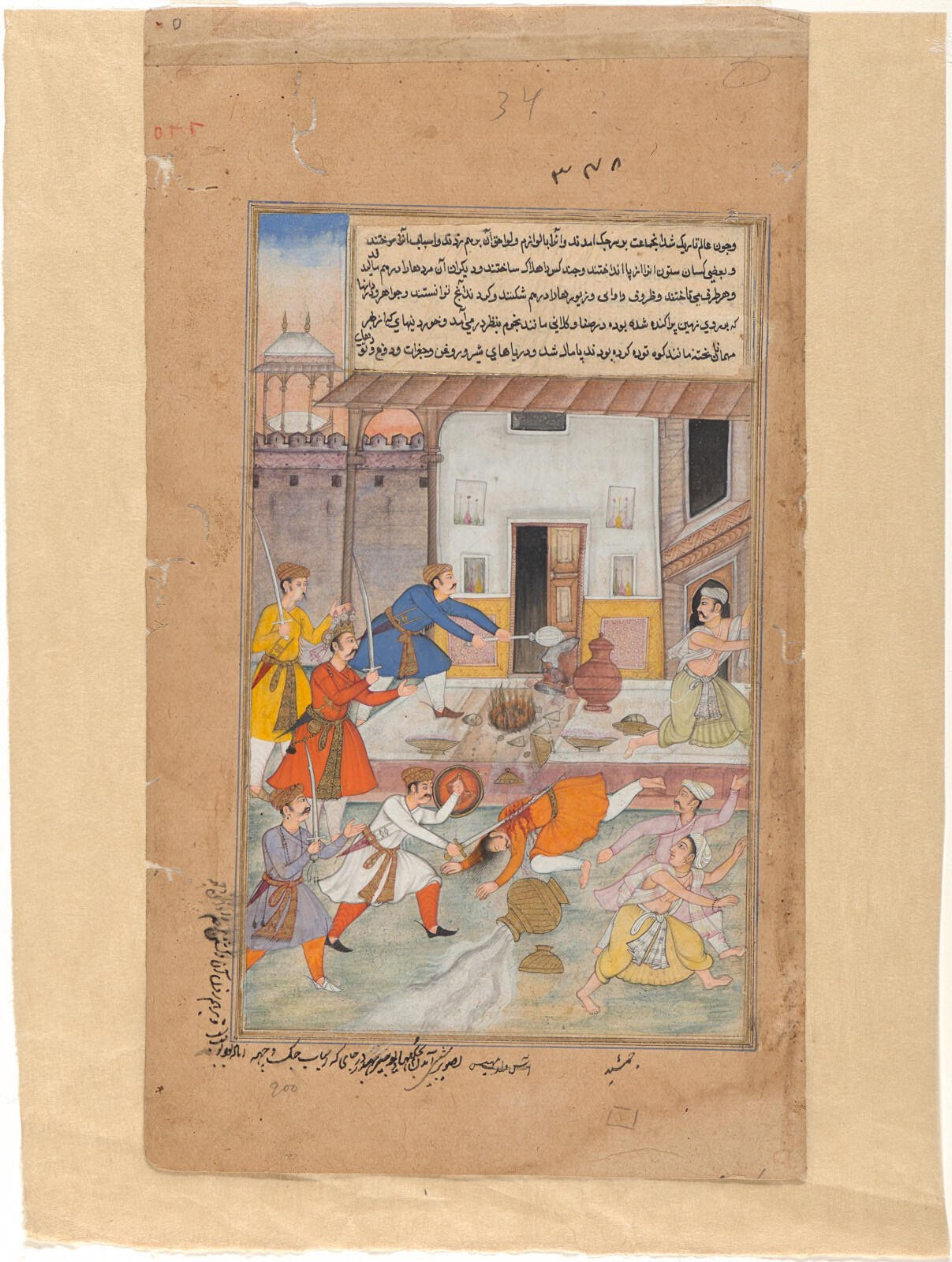
When Shiva heard of Sati’s death, his grief was immense, but so was his fury. He wasn’t just sad; he was outraged by the disrespect shown to Sati, and by extension, to the fundamental principles of dharma. He created Virabhadra, a terrifying manifestation of his wrath, who proceeded to destroy Daksha's yagna, decapitating Daksha himself.
Imagine this scene: a grand assembly, a sacred ritual, all shattered by one man’s ego and another’s righteous anger. The 'temple' of that yagna, meant for harmony, crumbled into chaos. It makes me think of those news headlines. A temple, a place of worship, meant for solace and connection, becomes a site of tragedy. Is it just 'stampede-like' incidents? Or is there something deeper at play? Is it the press of bodies, or the press of unexamined desires, of impatience, of a competitive energy that seeps even into our sacred spaces?
The myth doesn't just tell us about gods; it holds a mirror to our own impulses. It asks: what happens when reverence is replaced by self-importance, by a need to 'get there first', to 'see more', to 'experience intensely', even in a space meant for quiet devotion?
Later, Shiva, in his grief, carried Sati’s body, wandering the cosmos in a dance of sorrow. Vishnu, to bring Shiva back to his senses, dismembered Sati’s body with his discus. Wherever a part of her body fell, a Shakti Peetha was created, a place of immense spiritual power. Eventually, Daksha was revived, but with a goat’s head, a symbol of his stubborn ego.
The Practical Truths of Daksha’s Sacrifice Mythology
This ancient story, this Daksha’s sacrifice mythology, carries a profound lesson for us today, for anyone navigating the complexities of modern life, even for a web developer from Bengal. We build systems, we create networks, we design interfaces. We try to bring order to the digital chaos. But how often do we, like Daksha, get caught up in our own cleverness, our own importance, forgetting the true purpose?
- The Peril of Ego: Daksha's downfall wasn't due to malice, but to unchecked ego, a sense of superiority that prevented him from seeing the worth in Shiva. How often do we dismiss ideas, people, or even spiritual paths because they don't conform to our preconceived notions?
- The Fragility of Order: A grand yagna, a meticulously planned event, was destroyed. Our most sophisticated systems, our most well-intentioned gatherings, can crumble if the underlying principles of respect and humility are absent. A bug at 2 AM on a production server can feel like a small yagna collapsing.
- The Power of Detachment (Vairagya): Shiva, the ultimate renunciate, was initially outside the system, unconcerned with Daksha's grand display. His reaction, though violent, was ultimately about restoring dharma. For us, vairagya (detachment) isn't about apathy, but about seeing things clearly, without the distorting lens of personal gain or pride. It means approaching even a temple visit, or a complex coding problem, with a quiet mind, free from the desire for immediate results or personal validation.
- The Sacred in the Scattered: From the destruction of Sati’s body came the Shakti Peethas, places of immense power. Sometimes, it’s through breakdown that true insight, true power, emerges. When our digital systems crash, when our personal plans fail, what new configurations, what new understandings, can emerge from the scattered fragments?
The next time I hear of a tragedy in a place of worship, or even when I see a system fail, I’ll remember Daksha. I’ll remember how easily we can build something grand, only to have it fall apart because we forgot the quiet, humble heart of its purpose. Perhaps true devotion isn't about the grand spectacle, but about the gentle, unattached presence within each of us. What do you think?