
When a Boar Lifts the Earth: What Does Varaha Teach Us About Crisis?
2026-08-11 - ABikram Mondal
The Evening's Quiet, and a World Adrift
It was late again last night. A client’s server in Singapore had decided to play hide-and-seek with its database, and I’d spent hours staring at logs, coaxing packets back into line. The air conditioner in my small room hummed its familiar tune, and eventually, around three in the morning, a fragile peace returned to the network. As I finally leaned back, the city outside was utterly silent, save for a stray dog’s bark. In that stillness, my mind, as it often does, drifted far from silicon and firewalls. It found itself in a different kind of trouble, a cosmic one.
We live in times where stability feels like a mirage, doesn't it? One day the markets are up, the next a pandemic hits, then a new war flares, or a massive data breach exposes millions. It’s easy to feel like the earth itself is slipping from under our feet, that the ground we stand on isn't quite solid. And this isn't a new feeling. Our ancestors, too, wrestled with chaos, with the overwhelming sense of things falling apart. They didn’t have cyberattacks, but they had floods, famines, and the relentless march of time. And they had their stories, their Puranas, which often speak to these very anxieties.
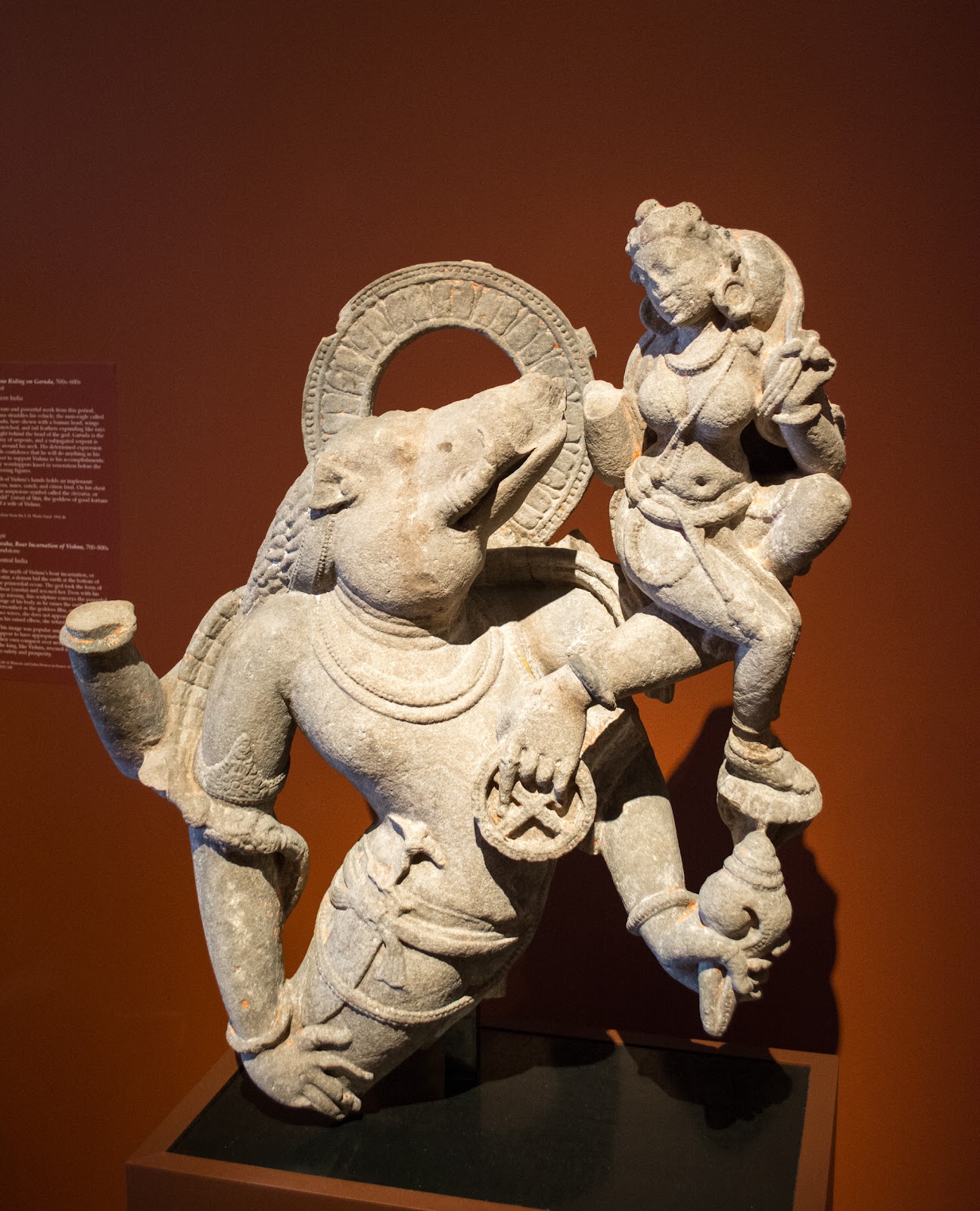
One such story, one that always comes to mind when I see the world tilt, is that of Varaha, the divine boar. It’s a powerful image, isn’t it? A colossal boar, emerging from the primordial waters, lifting the entire Earth, Bhumi, on its tusks.
What Was the Earth Doing Underwater Anyway?
The tale begins with a demon, Hiranyaksha, who, through severe austerities (tapasya), gained immense power. In his arrogance, he dragged the Earth goddess, Bhumi, down into the cosmic ocean, submerging her in the abyssal waters. Imagine that for a moment: the entire world, our very foundation, pulled into an unseen depth, lost to darkness. The gods were helpless. Creation was in peril. This isn’t just a mythical event; it’s a profound metaphor for any crisis that threatens to swallow us whole, to destabilize our very existence. When a system crashes spectacularly, or a nation faces an existential threat, it feels a bit like Bhumi being dragged down, doesn’t it?
Who, or What, is Varaha in This Story?
The Puranas describe how Lord Vishnu, seeing the plight of the Earth, took the form of a magnificent boar, Varaha. This wasn't some gentle rescue. This was a primal, powerful manifestation. Varaha plunged into the cosmic ocean, fought and defeated Hiranyaksha in a battle that lasted a thousand years (or some versions say a thousand celestial years, a concept that stretches our human understanding of time), and then, with immense strength and determination, he lifted Bhumi gently from the waters, balancing her on his mighty tusks. He brought her back to the surface, restoring order and stability.
It’s a vivid image, one that always brings a quiet awe. The sheer scale of the act, the courage, the unwavering focus. Varaha isn’t just strong; he’s perfectly suited for the task. His form, that of a boar, is often associated with determination, with rooting out problems, with an unwavering focus on the task at hand, even in the muck. It’s not a glamorous form, but it is an incredibly effective one.
What Does Varaha Teach Us About Crisis?
For a vairagi (one who lives with detachment), these stories aren't just quaint tales. They are blueprints for understanding the world, for navigating its inevitable ups and downs without being swept away. So, what does Varaha teach us about crisis?
Finding the Right Form for the Challenge
Firstly, it’s about choosing the right approach. Vishnu didn’t come as a warrior king or a sage. He came as a boar. Why? Because that was the form needed for that specific problem. A boar can root, can dig, can operate in difficult, submerged terrain. When we face a crisis, whether it’s a technical meltdown or a personal one, are we trying to solve it with the tools we usually use, or are we adapting? Are we becoming the Varaha our situation demands? Sometimes, the solution isn't elegant; it's primal, gritty, and requires getting our hands dirty.
Unwavering Determination in the Face of Overwhelm
Secondly, it’s about unwavering determination. The battle with Hiranyaksha wasn't short. Lifting the Earth wasn't easy. Varaha didn't give up. In our own lives, when systems fail, when projects falter, when personal challenges feel insurmountable, the temptation to quit is strong. But Varaha reminds us of the power of sustained effort, of holding steady even when the weight of the world seems to rest on our shoulders. It’s that quiet resolve that often carries us through.
The Value of Stability, Even if it's Not Glamorous
And finally, it’s about the profound value of stability. Varaha’s act wasn't about glory; it was about restoration. He brought Bhumi back, not for praise, but so that life could continue, so that dharma (righteous order) could be re-established. In my work, the most satisfying moments aren’t when I implement some flashy new tech. It’s when a critical system, after a period of instability, hums quietly again. When the data flows smoothly, when the network is secure. That unseen, unglamorous stability is the foundation for everything else. It's the silent work of Varaha, done every day, everywhere.
So, as I look out at the pre-dawn light, I think of that ancient boar. He isn’t just a myth; he’s a principle. He’s the strength we find when the world feels like it's sinking. He’s the quiet, determined effort to lift what is precious back to solid ground. He’s the reminder that sometimes, to save the world, you just have to be the right kind of boar.
What 'earth' do you feel is slipping from under your feet today?