
When a Temple Stands on Emptiness: What Does Vastu Shastra Teach?
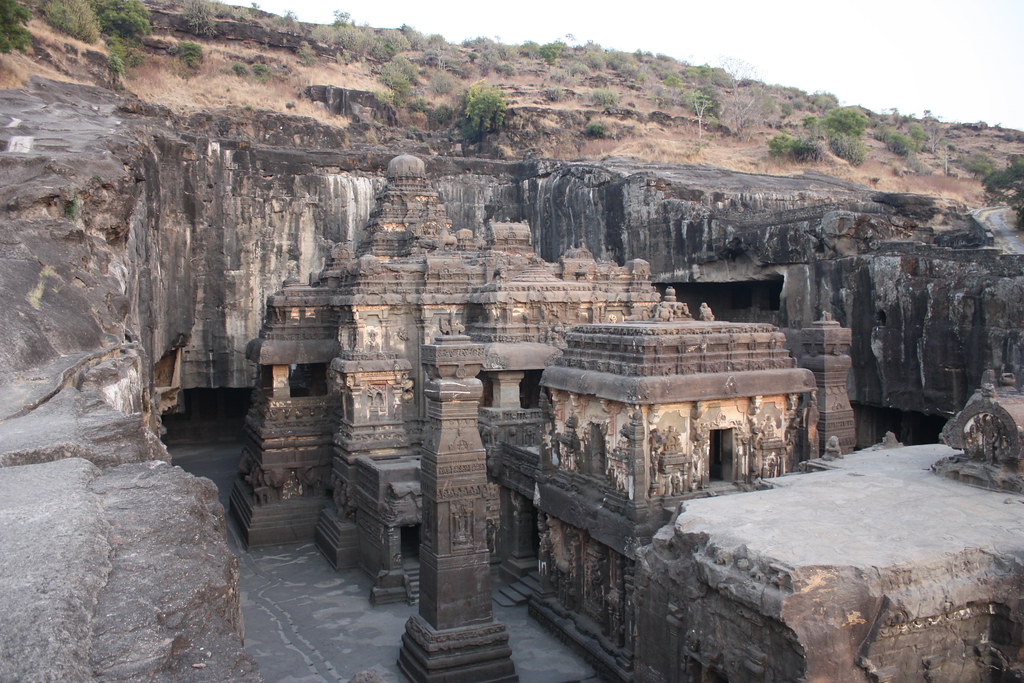
The Quiet Hum of a Kolkata Night
It was past midnight. The client call had stretched, as they often do, discussing some obscure network vulnerability. My window overlooks a narrow lane in Kolkata, usually bustling, but at this hour, it's mostly quiet. Just the distant hum of the city, and sometimes, the faint sound of a temple bell. I'd been thinking, as I often do after these calls, about structure, about foundations, about what holds things up, or more accurately, what allows them to stand gracefully.
And my mind drifted, as it often does, to Vastu Shastra. Not the trendy, commercialised versions you see today, but the core principles. The ancient Indian science of architecture and placement. We hear about it in new constructions, people ensuring their kitchens face the right direction, or their beds are aligned just so. But I often wonder about Vastu Shastra, the deeper, almost philosophical truth it carries, particularly for us now. What does it teach about emptiness, about the sacred spaces we inhabit, even digitally?
Looking at the Bhramasthanam: The Empty Heart
One of the most profound concepts in Vastu Shastra is the Bhramasthanam. It's the central point of any building, often left empty, open to the sky, or at least unburdened. It's considered the dwelling place of Brahma, the creator, the source of energy. It’s meant to be a void, a space of stillness. Think of the courtyards in old Bengali houses, or the central open space in ancient temples. They weren't just for light and air; they were the lungs, the heart of the structure.
And I see this principle playing out everywhere, even in our digital lives. When we build systems, when we design networks, we often focus on filling every gap, optimising every byte. But sometimes, don't we need a Bhramasthanam in our code, a central, unburdened core? A space where the system can breathe, where complexity doesn't immediately take root? I've seen too many systems collapse under their own weight, too much functionality crammed into too little foundational space. Perhaps a void, a deliberate emptiness, isn't a lack, but a source of strength.
Does Vastu Shastra Offer a Blueprint for Our Digital Selves?
Consider the silence, the maun, that a vairagi (a renunciate) seeks. It's not an absence of sound, but an absence of internal chatter, a space for clarity. The Bhramasthanam is like that for a building. It allows for the free flow of energy, prana, throughout the structure. If this central space is cluttered, blocked, or heavy, the entire structure feels off, out of balance. We've all walked into buildings that just feel 'wrong', haven't we? A heavy energy, a sense of unease. Perhaps the Bhramasthanam was compromised.
It makes me think about cybersecurity. We build firewalls, encryption, intrusion detection systems. We fortify the perimeter. But what about the core? What about the internal architecture? If the foundational logic is flawed, if the central 'empty' space of our network, the very protocols that enable communication, are compromised, then no amount of perimeter defence will truly protect it. The vulnerability is internal, systemic. It's about the very principles of design.
The Practicality of Sacred Space
The Puranas, the ancient Hindu texts, speak of the cosmos as a vast, ordered creation, yet one that arose from a primordial void. Brahma himself emerged from the lotus navel of Vishnu, a single point in an infinite ocean. This notion of creation from emptiness, of order from stillness, is deeply ingrained in Indian thought. Vastu Shastra isn't just superstition; it's an application of these cosmic principles to the human scale, to our homes and temples.
I remember a few years ago, working on a particularly thorny database migration. It was a mess. Data types were inconsistent, relationships were ill-defined, and the whole thing felt like a house built without a proper foundation. My senior, an old hand who always had a quiet wisdom, told me, “Bikram, sometimes you need to clear the centre before you can rebuild the walls.” He meant the core data structures, the very heart of the database. We spent weeks just on that 'empty' space, simplifying, normalising, creating a clean core. And once that was done, the rest of the migration, which had seemed impossible, flowed smoothly. It was a digital Bhramasthanam, cleared and purified.
Finding Your Own Bhramasthanam
So, what does Vastu Shastra teach us about living well, even in the modern world? Perhaps it's this: create space. Not just physical space, but mental space, digital space. Don't fill every moment, every byte, every corner of your mind with noise and activity. Allow for a central emptiness, a core of stillness. A place where creation can truly happen, where clarity can arise.
When you're designing a new application, or even just organising your thoughts for the day, pause. Find your Bhramasthanam. What's the unburdened core? What needs to remain open, free, unencumbered? This ancient wisdom, often dismissed as mere tradition, holds a surprisingly practical truth for our hyper-connected, often cluttered lives. To stand strong, sometimes, you need a little emptiness at your heart.