
When Numbers Whisper of Stillness: The Millennium Prize Problems
2026-09-13 - ABikram Mondal
The Quiet Hum of a Server and a Question
It was a late night, not unlike this one, the glow of the monitor reflecting in my tea. A client's server, a mess of dependencies, had decided to throw a tantrum. While the scripts ran their slow dance of reconciliation, I found myself drifting, as I often do, to other kinds of problems. Not the ones with lines of code, but the ones with lines of thought, stretching back centuries. My mind wandered to the Millennium Prize Problems, those seven grand challenges in mathematics, each a million-dollar beacon for the mind. There’s a quiet hum in rigorous thought, a stillness that pulls me away from the endless clamour of the network, the constant chatter of the internet.
The world around us, especially in my corner of cybersecurity and development, is always shouting about the 'next big thing.' AI, blockchain, quantum this, quantum that. But some ideas, some questions, have a different kind of resonance. They don't demand attention; they simply wait. The Millennium Prize Problems are like that. They stand as monuments to what we don't yet understand, inviting a deep, meditative engagement. One of them, the Navier-Stokes problem, has been in the news lately, and it reminds me again of the profound beauty in mathematical uncertainty.
What is the Navier-Stokes Problem, Anyway?
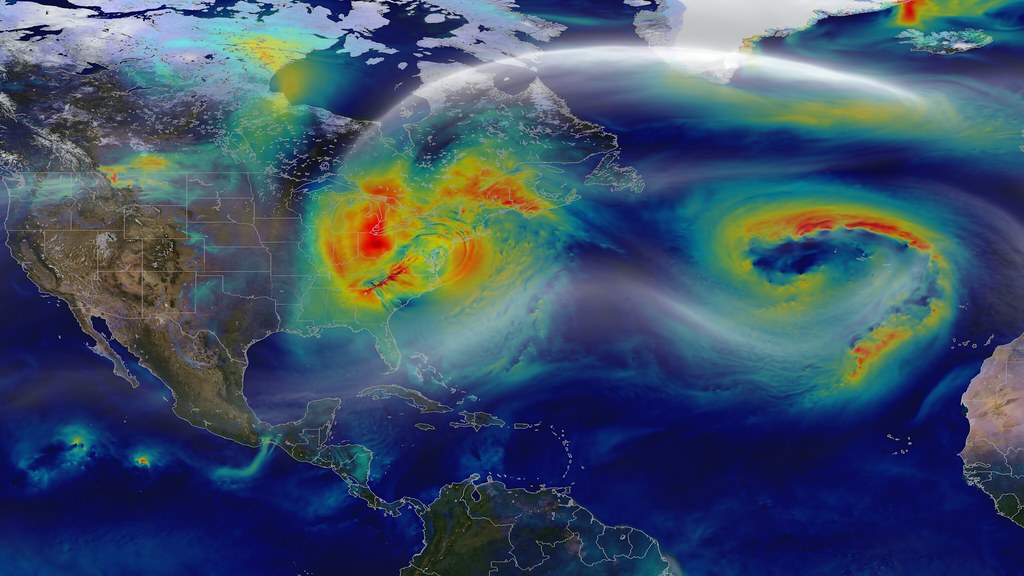
Imagine the flow of water in the Ganga, or the swirl of smoke from an incense stick. Or the air currents over the Bay of Bengal, shaping a monsoon. These are all fluid dynamics, and the Navier-Stokes equations are meant to describe them. They are a set of partial differential equations that, in theory, should model almost any fluid motion. But here's the catch, the core of the problem: can we prove that smooth, physically reasonable solutions exist for all time? And if they do, are they unique?
It sounds abstract, doesn't it? But its implications are vast, touching everything from weather prediction to aircraft design, from understanding blood flow to the very nature of turbulence. For a Vairagi (a renunciate who lives with detachment), the allure isn't in the practical application or the million-dollar prize. It's in the raw, unadorned question itself. It’s in the admission of not knowing, the humility inherent in a problem that has resisted the finest minds for generations. There's a particular kind of peace in acknowledging the vastness of our ignorance.
The AI Buzz and Our Mathematical Doubts
Recently, there's been a lot of noise about AI 'solving' or 'making breakthroughs' on problems like Navier-Stokes. I've read the headlines, seen the outrage from some mathematicians. 'I’m Really Terrified,' one said. 'Top mathematicians are outraged by OpenAI’s methods.' It's a familiar pattern. Every few years, a new technology promises to crack open the universe, to dismantle the walls of the unknown with brute force or clever algorithms. As a web developer and cybersecurity expert, I see this hype cycle constantly. We build ever more complex systems, believing we are closer to control, closer to understanding.
But true understanding, as the rishis (sages) taught, often comes not from conquering, but from observing, from patient contemplation. AI might find patterns, might approximate solutions, might even suggest new avenues of exploration. But a proof, a rigorous, undeniable mathematical proof, is a different beast entirely. It’s a structure built with absolute certainty, each step following logically from the last, until the truth stands revealed, unshakeable. It's not about 'good enough' or 'highly probable.' It's about 'is' or 'is not.'
Finding Stillness in the Rigor
I remember a late night during my university days, grappling with a particularly dense proof in number theory. Hours blurred. The world outside faded. My mind became a quiet forge, hammering away at implications, checking premises, searching for that elusive connection. When the pieces finally clicked, there wasn't a shout of triumph, but a profound, almost silent, sense of rightness. A deep calm. That's the meditative stillness hiding inside rigorous thought. It's a solitude of the mind, where the ego recedes, and only the problem remains.
The Millennium Prize Problems are not just about finding answers. They are about the journey, the intellectual tapasya (austere effort) of pursuing those answers. They remind us that some questions are so fundamental, so beautifully complex, that they demand our deepest attention, our most patient observation. They demand a vairagya, a detachment from the immediate outcome, a love for the process itself. Whether AI truly 'solves' Navier-Stokes or not isn't the point for me. The point is the enduring invitation of the problem, the way it makes us slow down, think deeply, and perhaps, find a moment of stillness in a world that rarely offers it.
What else do these great mathematical puzzles teach us, beyond the numbers themselves? Perhaps they teach us how to truly listen to the universe's whispers.