
When a Circle Holds the Cosmos: The Stillness of Infinity
2026-09-19 - ABikram Mondal
When a Circle Holds the Cosmos: The Stillness of Infinity
It was late last night, the power flickering again with the monsoon winds outside. I was trying to debug a stubborn API integration for a client in Kolkata, the kind where the documentation is vague and the error messages are even vaguer. My mind, usually quite disciplined, kept drifting. Not to the deadline, not to the client’s inevitable frustration, but to something entirely different: the idea of infinity. It’s funny, isn’t it? How rigorous thought can sometimes lead you to the most unrigorous, almost mystical, places.
As a vairagi (one who lives with detachment), I find myself drawn to concepts that transcend the immediate, the tangible. Technology, for all its marvels, is often about the immediate, the now, the next update. But mathematics, ah, mathematics. It offers something different. It offers a stillness, a profound silence even in its most complex expressions. And nothing embodies this more beautifully for me than the concept of mathematical infinity. Not just a very large number, mind you, but something beyond quantity, beyond measure.
What Does Mathematical Infinity Truly Mean?
We use the word 'infinity' so casually, don't we? An infinite number of stars, an infinite loop in code (usually a bug, but still). But in mathematics, the concept is far more nuanced, far more beautiful. It’s not just 'endless.' It’s a concept that has challenged and fascinated thinkers for millennia, from ancient Greek philosophers who grappled with Zeno’s paradoxes to modern set theorists like Cantor, who showed there are different 'sizes' of infinity. Think about that for a moment: some infinities are bigger than others. It’s like discovering that even in endlessness, there are hierarchies, subtle distinctions.
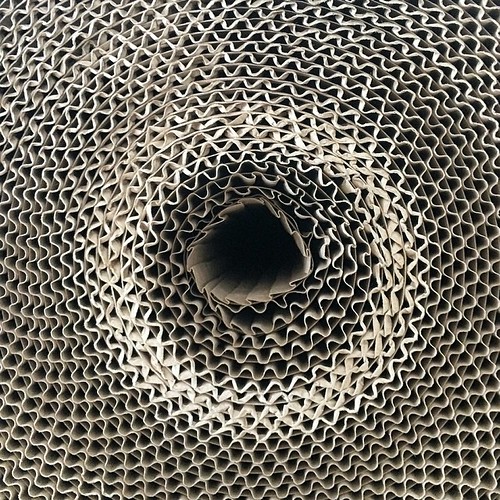
When I think of a circle, simple as it is, it holds a kind of infinity. It has no beginning, no end. You can divide its circumference an infinite number of times, zoom in forever without reaching a fundamental 'smallest' point. The irrational number Pi (π), which describes the ratio of a circle's circumference to its diameter, is an infinite, non-repeating decimal. It’s a number that never truly resolves, never settles. It just… continues. This endlessness, this lack of ultimate resolution, is a mirror for something in our own lives, isn't it?
The Stillness Hiding in Endless Patterns
For a web developer, patterns are everything. We build systems from repeatable components, look for patterns in data, in user behaviour. But mathematical patterns, especially those that hint at infinity, have a different quality. They are not merely repeatable; they are inexhaustible. Consider fractals, for example. Those intricate, self-similar patterns that repeat at every scale. You can zoom into a Mandelbrot set forever, and new, complex details will always emerge. It’s an infinite landscape within a finite boundary, a profound paradox.
There's a deep meditative stillness in contemplating such things. When I was younger, learning about the set of natural numbers (1, 2, 3...) and how it is an infinite set, yet somehow 'smaller' than the set of real numbers (which includes all the decimals in between), my mind truly quieted. It wasn't about finding an answer, but about sitting with the immensity of the question, the sheer elegance of the distinction. It’s like gazing at the vastness of the night sky, not trying to count the stars, but simply letting their uncountable presence wash over you.
The Vairagi's Gaze on the Unbounded
From a vairagi’s perspective, the idea of infinity touches upon the nature of reality itself. We often chase finite goals: a better job, more money, a new gadget. But these are all bounded, temporary. The pursuit of the infinite, not as a physical thing but as a conceptual truth, helps to put these finite pursuits into perspective. What truly lasts? What transcends the coming and going of things? Mathematical infinity, in its pure, abstract form, offers a glimpse into a realm that is unchanging, always there, whether we perceive it or not.
It’s a powerful lesson in detachment. If something can be endlessly divisible, endlessly large, or endlessly small, then our attachment to any specific 'point' or 'quantity' loses some of its grip. The grand cosmic dance, the intricate patterns of the universe, the very fabric of existence, all seem to echo this boundless quality. And within this boundlessness, there is an immense peace. A silence that hums beneath the noise of our daily lives.
So, the next time you see a circle, or perhaps even a line stretching out into the horizon, remember the mathematical infinity it implies. It’s not just an abstract concept for dusty textbooks. It’s a profound idea that can quiet the mind, offering a moment of true stillness amidst the relentless push and pull of the world. It reminds me that some of the deepest truths aren't about what we can grasp, but about what we can acknowledge as eternally beyond our grasp.