
When a Temple Guards a Secret: What Does Bhojshala Teach About Access?
2026-09-16 - ABikram Mondal
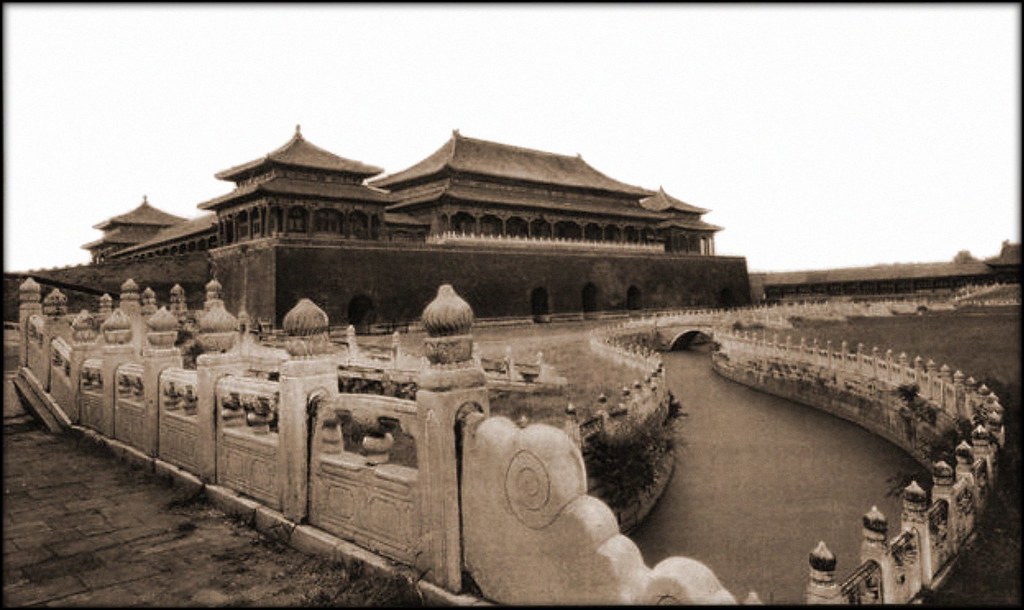
The news about the Bhojshala temple in Madhya Pradesh caught my eye last week. Unrestricted access for Hindus, a court verdict. It’s a complex issue, years of back-and-forth, shared spaces, differing claims. As a vairagi (one with detachment), I try to look beyond the immediate headlines, past the clamour of who gets what, and see what quiet lesson might be hiding there. And it got me thinking, not about temples made of stone, but about the 'sacred' spaces we build online, and who truly holds the keys.
Indian mythology, especially the Puranas and the great epics, is full of such stories of contested access, of gates guarded by divine beings or fearsome creatures. Think of the churning of the ocean (Samudra manthan), where devas and asuras both wanted the nectar of immortality. Or even simpler, the story of Shiva's gatekeeper, Nandi, and how he decides who gets to approach the Lord. These aren't just grand narratives; they’re blueprints for understanding how we navigate shared resources, how we define belonging, and the practical truths of control.
What Does 'Sacred Space' Mean in a Networked World?
For centuries, a temple or a sacred grove was a defined physical space. Its boundaries were clear, its access often dictated by tradition, community, or even royal decree. The Bhojshala, a historical site with both temple and mosque elements, is a modern example of this physical contest. But what happens when our 'sacred spaces' become digital? When they're not stone and mortar, but lines of code and data packets?
Consider our social media platforms. Aren't they, in a way, modern agoras, places where we gather, share, and even perform our 'rituals' of connection? Who controls access to these? The companies that own them, of course. They set the terms, they decide who gets a voice, who gets blocked, who gets promoted. And just like a temple's gates, these digital gates can be opened or closed based on algorithms, policies, or even political pressure. We often forget this, consuming content as if it's a freely given offering, without acknowledging the gatekeepers.
Even in cybersecurity, my field, access control is everything. Who gets into the network? Who can read this data? Who can modify that server? We build firewalls, deploy intrusion detection systems, manage user permissions (ACLs, as we call them). It's all about defining the boundaries of our digital 'temple' and ensuring only the authorized enter. The practical truth from Bhojshala, then, is that defining and enforcing access is not just a spiritual or cultural concern, but a fundamental technical and societal one. Whether it's a physical monument or a cloud server, the question of 'who gets in?' remains constant.
Is Unrestricted Access Always a Blessing?
The Madhya Pradesh High Court ruling allowing Hindus unrestricted access to Bhojshala seems, on the surface, like a victory for freedom. And perhaps it is. But the concept of 'unrestricted access' itself is something I, as a vairagi, view with a certain quiet caution. Is true unrestricted access ever possible, or even desirable, for any shared space?
In the digital realm, 'unrestricted access' often leads to chaos. Think of open-source projects. While the code is open to all, there are still maintainers, core contributors, people who decide which changes get integrated. Without some form of structure, even a loose one, a project quickly becomes unmanageable. The internet, in its early days, promised a kind of unrestricted freedom, but we've seen how quickly that can devolve into misinformation, cyberattacks, and echo chambers. A bug I once spent a whole night tracking involved an improperly configured access list; a 'sacred' part of a client's network was inadvertently left open, and while no malicious actor found it, the potential was chilling. Even for a renunciate, boundaries are sometimes necessary for preservation.
The Puranic story of Vamana, an incarnation of Vishnu, who asked Bali for just 'three paces of land,' comes to mind. Bali, in his generosity, granted it, but Vamana then expanded to cosmic proportions, covering all three worlds in his strides. It's a mythological lesson in the potential implications of granting seemingly 'unrestricted' access without fully understanding the scope or consequence. Sometimes, what seems like a simple grant of access can ripple outwards in unexpected ways.
Finding Detachment in Digital Gatekeeping
So, what does a vairagi take from the Bhojshala verdict? Not a political stance, certainly. Not an opinion on who 'deserves' access more. Instead, it's a quiet reflection on the nature of control, ownership, and the inevitable friction that arises when multiple claims are made on a single resource, physical or digital.
The practical truth is this: every system, every community, every 'sacred space' (be it a temple or a database), requires some form of gatekeeping. The challenge isn't to eliminate gatekeeping (which is often impossible or destructive), but to ensure that the gatekeepers are just, transparent, and operate with a sense of dharma (righteousness). This is true for ancient temples and for the algorithms that govern our online lives.
My work in cybersecurity is, in a way, a form of digital dharma. I help build the gates, define the access, protect the integrity of the 'sacred' data. But I also know that all gates, all protections, are temporary. They shift, they evolve, they are challenged. Just like the Bhojshala, the rules of engagement are always being re-written. The challenge is to remain unattached to the outcome, to do the work with diligence, and to remember that true freedom isn't found in unrestricted access to external things, but in the stillness of our own minds. What kind of gates do we truly need?